
Yin and Yang in Acupuncture: How it Works and Helps Every Day
You’ve probably heard the terms yin and yang—maybe in a yoga class, on clothing, or in passing conversation. That familiar black-and-white symbol represents more than an aesthetic idea. In Traditional Chinese Medicine (TCM), yin and yang describe how balance is created through complementary forces in the body.
In a city like New York—where schedules run tight, and stress can feel constant—many people notice when that balance starts to slip. Trouble sleeping, feeling wired but exhausted, or tension that never quite fades are common signs.
Acupuncture uses the yin–yang framework to understand these patterns and gently support the body in returning toward equilibrium.
This article explores how yin and yang are understood in acupuncture, how imbalance may show up in daily life, and how treatment can support stress regulation, sleep, pain relief, and overall energy—without oversimplifying or overpromising.
The Fundamentals of Dual Energies
In TCM, yin and yang describe relationships, not fixed substances. They explain how opposing qualities depend on one another to create function and stability. One cannot exist without the other.
Balance is not static—it’s an ongoing process of adjustment. Health reflects how well these forces respond to internal needs and external demands.
Where does the idea of yin and yang come from?
Ideas about balance in Chinese medicine developed alongside Daoist philosophy and early medical texts such as the Huangdi Neijing. Observations of natural cycles—day and night, rest and activity, heat and cold—shaped how health was understood as a dynamic process rather than a fixed state.
How might one see balance through opposing forces within the physical self?
Imagine a setup where each part keeps the other in line:
Yin: Yin represents cooling, nourishment, rest, and substance. It supports sleep, recovery, hydration, and the body’s ability to slow down and restore.
Yang: Yang represents warmth, movement, activation, and circulation. It fuels metabolism, physical activity, digestion, and mental alertness.
How do yin and yang relate to qi (your energy)?
Qi (pronounced “chee”) refers to the body’s functional energy. It supports movement, warmth, circulation, and organ activity. Qi expresses both yin and yang qualities, and the balance between these influences how we feel day to day.
Recognising Yin–Yang Imbalance
Balance exists when yin and yang support one another. When one becomes excessive or deficient, symptoms may appear.
Yang Excess may present as restlessness, irritability, overheating, facial flushing, inflammation, or difficulty winding down—even when tired.
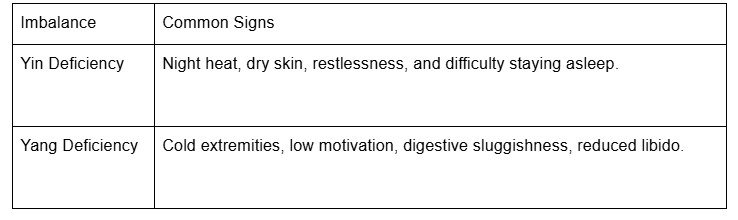
Yin Deficiency often shows up as night sweats, poor sleep, dry sensations, or feeling internally “wired” after dark, when the body should be cooling and settling.
How Acupuncture Supports Yin–Yang Balance
At Open Care Community, restoring balance begins with understanding how yin and yang are expressing themselves in your body.
What makes an acupuncturist check how balanced you are?
People using acupuncture typically begin with observing hidden rhythms. Through pulse readings or shifts on the tongue, balance in yin and yang becomes visible. How things unfold determines what comes next.
Pulse Diagnosis: By gently assessing qualities such as depth, strength, and rhythm, practitioners gather information about how energy is moving. Patterns over time—not single readings—help reveal imbalance.
Tongue Observation: Tongue color, shape, and coating offer insight into internal heat, fluid balance, and circulation. These signs help guide treatment decisions alongside symptom discussion.
Lifestyle Habits: Sleep habits, digestion, temperature preference, and stress levels all contribute valuable context.
What causes therapies to bring stability back?
Starting at key spots along the body, acupuncture helps shift the body toward balance. When signs suggest yin deficiency, treatment may focus on supporting cooling, nourishing processes. When coldness or fatigue point to yang deficiency, warming points or herbs may be introduced.
Does community acupuncture work well in aligning yin and yang?
Yes, each person receives attention suited to their unique balance of energies. Though spaces are shared, routines adapt carefully to match individual rhythms. Treatment plans respond directly, aligning with how yin and yang express themselves in each resident.
Reserve your spot in a group acupuncture session now.
Yin-Yang Balance in Today’s World
Modern lifestyles often emphasise constant activity and stimulation. Over time, this can place strain on the body’s ability to regulate rest, recovery, and energy reserves.
What effect does using technology have on your life?
Excess Stimulation: Prolonged screen use and mental engagement can contribute to yang excess, making it harder to unwind or sleep.
Insufficient Movement: Long periods of inactivity may dampen circulation and warmth, leading to sluggishness or low energy.
Symptoms to Watch For:
Daily Habits for Harmony
Daily routines play a meaningful role in maintaining balance. Regular rest, gentle movement, time outdoors, and consistent meals can reinforce the effects of acupuncture without adding pressure or rigid rules.
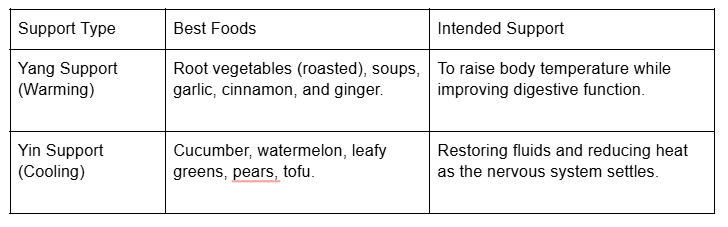
What role does food play?
Food acts as a primary treatment within Chinese medical tradition. One finds stability by matching meals to bodily needs.
Can herbal medicine help?
Yes. Though acupuncture adjusts the flow of existing energy, herbs introduce tangible support into the system. When yin or yang has weakened after months or years of gradual loss, plant-based remedies step in with restorative strength.
Ask Your Provider About Personalised Herbal Support.
Specific Goals: Fertility and Athletic Recovery
Finding balance between rest and effort matters most when managing stress, supporting fertility, or recovering after physical activity.
What counts above all is striking a steady rhythm - pausing when needed, pushing forward at the right moment - for those coping with pressure, trying to conceive, or healing post-exercise.
In fertility care—including IVF—acupuncture is often used to support circulation, stress regulation, and cycle awareness. Yin–yang balance is assessed individually, and care is adapted based on where support is needed at different stages.
For athletes, overtraining can strain recovery. Techniques such as acupuncture, cupping, and Tui Na may help reduce tension and support circulation as part of a broader recovery plan.
When to Seek Help
Signs you should talk to a practitioner:
Persistent fatigue despite adequate rest
Difficulty sleeping or winding down
Tension paired with low energy
Ongoing digestive discomfort
A sense of stagnation or burnout
Care That Meets You Where You Are
Open Care Community is built on the belief that acupuncture and integrative care should be accessible, respectful, and patient-led. Our sliding-scale model allows you to choose what you can afford—without insurance or proof of income.
Located in Downtown Brooklyn and fully ADA-accessible, we offer both community and private acupuncture in a calm, supportive environment.
Discover paths to wellness at Open Care Community now.
FAQs
1. What do Yin and Yang mean in acupuncture?
In traditional Chinese medicine, Yin and Yang represent two complementary forces that exist in balance. Health is believed to depend on maintaining harmony between them.
2. How does acupuncture balance Yin and Yang?
Acupuncture targets specific points on the body to help regulate the flow of Qi and restore balance between Yin and Yang.
3. What happens when Yin and Yang are out of balance?
An imbalance may be associated with symptoms such as fatigue, stress, digestive discomfort, or sleep issues.
4. Can acupuncture help restore Yin and Yang balance?
Acupuncture is commonly used in traditional Chinese medicine to support balance within the body and promote overall wellbeing.
5. Why is balance important in traditional Chinese medicine?
Balance is considered essential because it allows the body’s systems and energy to function harmoniously.
