
How Acupuncture Can Support Smoking Cessation
Introduction
If quitting smoking is proving to be a problem for you, then be reassured you are in good company. Traditional cessation methods like patches, medication, or counselling are effective in some cases, but these only scratch the surface of some of the areas of the complex network of physical and psychological dynamics responsible for the habit of smokers. Acupuncture is an alternative form of treatment, one aimed at both the physical cravings and psychological compulsions responsible for the difficulty in quitting the habit of smoking.
Here at Open Care Community in Downtown Brooklyn, we've liberated dozens of patients from the bondage of nicotine addiction with our low-cost, sliding-scale acupuncture treatment ($50–$90, +$15 first visit). Why? Because we believe everybody deserves support on their way toward greater well-being, no matter what their income.
Ready to begin smoke-free living with acupuncture? Book your first visit with Open Care Community today in Brooklyn.
What Is Acupuncture and What Is Its Mechanism for Treating Addiction?
Understand Acupuncture's Healing Mechanisms
Acupuncture involves stimulation of specific points on your body to reestablish natural healing and balance in you. Through insertion of thin sterile single-use acupuncture needles to such points, your body reacts by releasing endorphins, your very own "feel-good" natural substances that are used to curb cravings and alleviate withdrawal symptoms. Through research, acupuncture has been established to influence neurotransmitters such as dopamine and serotonin, chemicals that significantly cause addiction and mood regulation.
While Traditional Chinese Medicine considers the disruption to your energy of qi (your valuable energy supply), it specifically refers to an imbalance to your Lung and Kidney systems. Acupuncture seeks to bring balance back to the energy system while supporting the natural cleanse of the body.
Key Acupuncture Points for Smoking Cessation
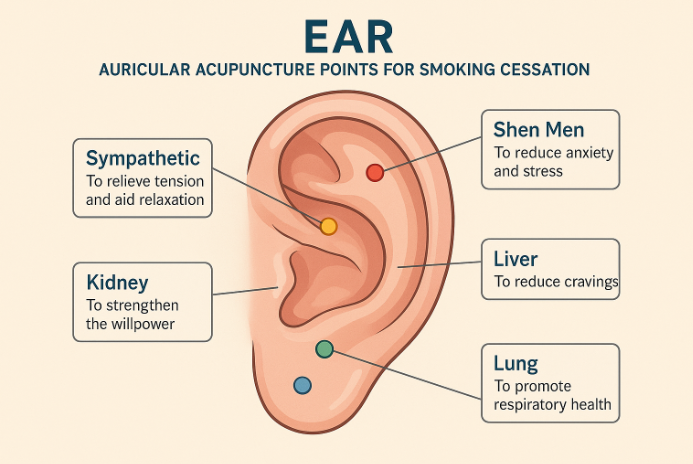
Important ear acupoints used for quit smoking treatment therapy
The most common technique is auricular (at the ear) acupuncture, by the National Acupuncture Detoxification Association (NADA) protocol. It involves the insertion of extremely thin needles into five specific ear points:
Shen Men ("Spirit Gate"): Relaxes worry and promotes mental balance
Sympathetic: Inhibits nervous system activity and suppresses stress response
Kidney: Aiding purification and fortifying willpower
Liver: Aiding in eliminating toxins and regulating irritability
Lung: Eases respiratory congestion and promotes breathing
Medical Acceptance of Acupuncture for Addiction
World Health Organisation gave formal approval to the treatment of acupuncture for substance abuse in 1996. Over 250 American and British-based hospitals now incorporate treatment strategies of acupuncture in addictions, and over 700 centres of addiction treatment incorporate therapy through acupuncture within the overall treatment regime
Why It Is So Hard to Stop—And How Acupuncture Reduces It
The Nicotine Addiction Cycle
Nicotine is physically habit-forming and psychologically habitual. Nicotine reaches your brain immediately when you light up, and it activates dopamine in the brain reward centre. Your brain will compensate by reducing normal dopamine delivery over time, however, and this sets in motion a vicious cycle with you craving nicotine just to be able to feel "normal."
How Withdrawal Symptoms Develop
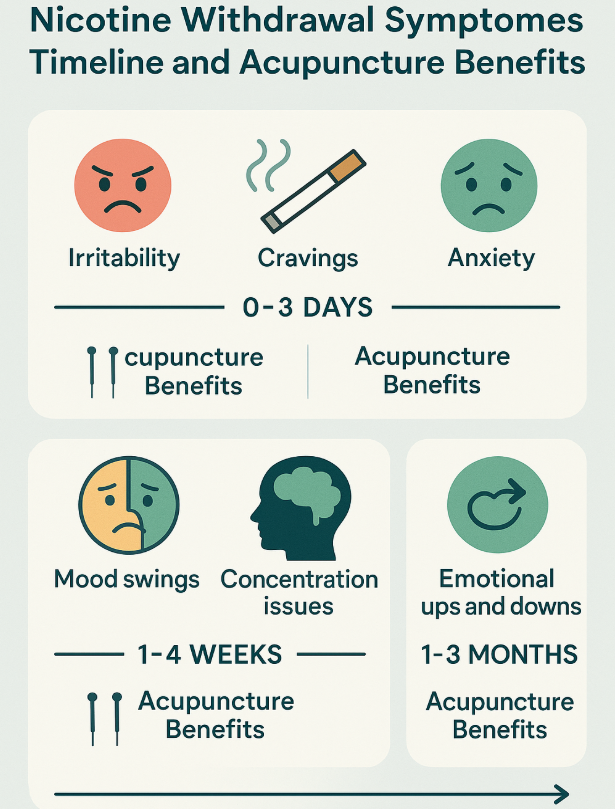
Timeline of nicotine and symptoms of withdrawal, and how acupuncture may be beneficial at each stage
As soon as you stop smoking, withdrawal symptoms run their relatively typical course:
Days 1-3: Strong desires to eat, irritability,
Week 1-4: Fluctuating moods, depression, disturbances of sleep
Months 1-3: Random urges, mood swings, sensitivity to stress
Nicotine withdrawal symptoms and how acupuncture relieves them in the long run. If you give up on cigarettes, symptoms of withdrawal will typically follow one of these predictable paths:
Days 1-3: Severe hunger, crankiness, anxiety, inability
Week 1-4: Mood swings, depression, sleep disturbances, increase in appetite
Months 1-3: Infrequent cravings, mood swings, sensitivity to stress
Acupuncture's Multi-Faceted Approach
The findings are from a 2019 intensive meta-analysis of 24 randomized trials with almost 4,000 participants. The trials established that stopping smoking rates were considerably greater with acupuncture in relation to no treatment, and the advantages lasted at least six months. The researchers demonstrated that acupuncture in combination with counselling was by far the best treatment of all, with stopping rates increased by 25% compared to acupuncture alone.
Acupuncture addresses withdrawal by:
Craving reduction: A 50% reduction in cigarette consumption is established in initial sessions
Calming the nervous system: Activates parasympathetic responses that counter stress-induced smoking triggers.
Improving mood stability: Increases endorphin and serotonin levels naturally
Supporting detoxification: Enhances circulation and lymphatic drainage to clear nicotine metabolites
Strengthening self-control: Balances the brain's centres of reward without stimulation from outside
Your Smoke-Free Program for Open Care Community
What to Expect During Your First Appointment
Our first consults entail recognition of your habit of smoking, triggers, and previous attempts to quit. We will touch on:
How often do you smoke? and the Amount Per Day
Previous attempts to stop, and what you struggled with
Your degree of tension, sleepiness, and overall well-being
Your reasons to resign and goals
Furthermore, we will carry out Traditional Chinese Medicine diagnosis, like pulse and tongue observation, in an effort to establish your individual constitutional pattern and customize treatment specifically to you.
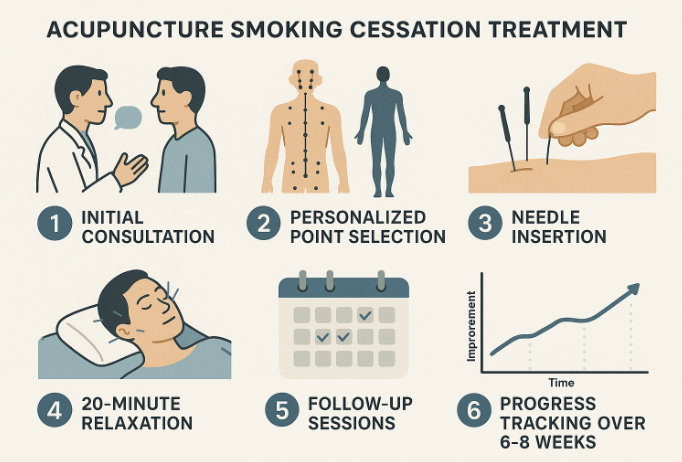
Treatment Protocol and Session Schedule
Most patients benefit from:
Week 1-2: 2-3 sessions to adjust to acute withdrawal symptoms
Weeks 3-6: 1-2 sessions weekly for craving management and emotional support
Weeks 7-8: Relapse prevention sessions to reinforce new behaviours
Every session lasts about 45 minutes with 20 minutes of needle time. The vast majority of our patients relax very well during treatment—some even fall asleep during sessions, an indication that your body is becoming more adept at relaxing into modes other than our office routine
Community Vs. Individual Sessions for Cessation from Smoking
Community Acupuncture: Our community treatment room is a casual space where you will be treated in the presence of other individuals on similar healing paths. Our patients have repeatedly reported space particularly beneficial in unwinding from addictions.
Private Sessions: For you if you like to be treated on a one-to-one basis or if you want to resolve private issues of tobacco usage behavior and triggers.
Integrating Supporting Features
We often combine acupuncture with:
Herbal consultations: Individualized formulas to assist with lung detoxification and management of urges
Stress management techniques: Stress management techniques: Lifestyle recommendations and breathing techniques
Dietary recommendations: Foods that increase neurotransmitter stability and suppress hunger
👉Want to quit smoking with the help of acupuncture? Call upon a practitioner or schedule your first visit today.
What the Research Says About Acupuncture and Smoking Cessation
Clinical Evidence of Efficacy
Retrospectively, in 2018, 148 service members were studied to demonstrate auricular acupuncture in combination with nicotine replacement therapy, having a success rate of 47.7% compared to 30.6% of nicotine replacement therapy alone. This represented an increase in quit rates by 56% with the incorporation of acupuncture to conventional therapy.
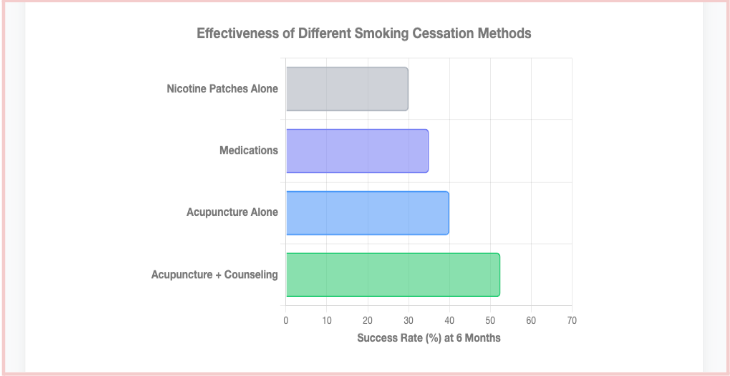
Success rates of different smoking cessation methods
Comparing Treatment Approaches
Recent systematic reviews show that:
Acupuncture alone: 30-50% success rate at 6 months
Nicotine patches alone: 20-40% efficacy
Prescription medications: 25-45% success rate
Acupuncture + counselling: 45-60% success rate
Understandings of Mechanisms
Clinical studies indicate that acupuncture acts through several neurobiologic mechanisms:
Dopamine regulation: Modulates reward pathways without creating new dependencies
Endorphin release: Natural pain and stress relief that reduces the need for nicotine's mood effects
GABA activation: Enhances the brain's natural calming mechanisms
Stress hormone reduction: Lowers cortisol levels that often trigger smoking urges
Who Should Consider Acupuncture for Smoking Cessation?
Ideal patients for the Treatment of Acupuncture
Acupuncture can be particularly effective for:
Heavy smokers who have found medications ineffective or intolerable
People with multiple failed quit attempts seeking a different approach
Those experiencing high stress that triggers smoking urges
Individuals sensitive to medications or preferring natural treatments
People dealing with emotional eating or other addictive patterns
Combining Acupuncture with Other Methods
Many patients successfully combine acupuncture with:
Nicotine replacement therapy: Decreasing required dose and aiding tapering off of NRT with acupuncture
Prescribed medication: Capable of reducing side effects while maximizing efficacy
Behavioural counselling: The combination has the most favourable outcomes demonstrated in studies
Support groups: Acupuncture offers other coping skills for managing stress and cravings
Important Considerations
While acupuncture is safe for most people, certain individuals should discuss treatment carefully with practitioners:
Pregnant women: Generally safe but requires specialized protocols
People with bleeding disorders: May need modified needle techniques
Those with severe mental health conditions should coordinate with mental health providers
Common Treatment Timelines
Most patients report:
After 1-2 sessions: Reduced daily cigarette consumption by 25-50%
After 3-4 sessions: Better stress management without automatic smoking response
After 6-8 sessions: Complete cessation or smoking fewer than 3 cigarettes per week
After 3 months: Sustained abstinence with occasional mild cravings during high stress
Ready to explore a non-judgmental way to support your future health? Book your acupuncture consultation now.
Starting Your Smoke-Free Journey
Taking the First Step
Smoking cessation is one of the strongest things you can do for your body. In 20 minutes after your tobacco break, your blood pressure and heart rate return to normal. In 24 hours, your chances of having a heart attack begin to reduce. The advantages keep accumulating over the course of the years.
Open Care Community respects how nicotine cessation is less about dissolving a habit and more about changing how one relates to pressure, feelings, and taking care of oneself. Our method respects the physical and psychological elements of addictions while delivering real-world strategies toward long-term achievement.
What Sets Our Approach Apart
Sliding-scale accessibility: $45–$90 per session means treatment fits your budget
No insurance hassles: Pay what you can afford without prior authorization or claim denials
Experienced practitioners: Licensed acupuncturists specializing in addiction support
Convenient Brooklyn location: 44 Court Street, 10th floor, accessible via A/C/F/R/2/3/4/5 trains
Comprehensive care: Integration with herbal medicine, bodywork, and lifestyle support
Beyond Just Quitting
Many patients find that acupuncture for smoking cessation opens the door to broader wellness improvements. As your body detoxifies from nicotine and your nervous system rebalances, you may notice:
Better sleep quality and energy levels
Improved digestion and appetite regulation
Enhanced stress resilience and emotional stability
Greater sense of empowerment over your health choices
Your journey to freedom from nicotine starts with a single decision to try something different. At Open Care Community, we're here to support that decision with expertise, compassion, and affordable care that meets you exactly where you are.
Book an appointment today:
📍Address: 44 Court Street, Suite 1000 (10th floor), Brooklyn, NY 11201
📧Email: info@opencarecommunity.com
📞Phone: (917) 426-1138
FAQs
1. Does acupuncture help with smoking cessation?
Acupuncture may help by reducing cravings, easing anxiety, and managing withdrawal symptoms, making it easier to quit smoking when combined with motivation and lifestyle changes.
2. How does acupuncture reduce nicotine cravings?
Acupuncture can influence the nervous system and neurotransmitter release, helping regulate dopamine levels that are disrupted by nicotine dependence.
3. What are the acupuncture points used to stop smoking?
Common points include ear (auricular) points, Shen Men, Lung points, and stress-related meridians, all linked to addiction and emotional regulation in TCM.
4. What is auricular acupuncture for smoking cessation?
Auricular acupuncture focuses on specific points on the ear associated with addiction, stress, and impulse control, and is widely used in smoking cessation programs.
5. What is the success rate of acupuncture for smoking cessation?
Success rates vary, but studies suggest acupuncture may improve quit rates when used alongside behavioural support, especially for managing cravings and relapse triggers.
6. How many acupuncture sessions are needed to quit smoking?
Most practitioners recommend weekly sessions over several weeks, with frequency adjusted based on cravings and withdrawal symptoms.
7. Is acupuncture safe for people trying to quit smoking?
Yes. When performed by a qualified practitioner, acupuncture is considered safe, low-risk, and drug-free.
