Chinese Medicine for IBS and Digestive Discomfort
IBS and Digestive Discomfort?
Living with IBS can feel like your gut has a mind of its own: yesterday it's crampy pain and rapid diarrhea, today it's uncomfortable bloating and sluggishness. You did it all: fiber supplements, antispasmodics, special diets, and even antidepressants. Nothing gave lasting relief until Traditional Chinese Medicine at Open Care Community came along. "For the first time in a long time, somebody examined your overall picture, not only gut symptoms but levels of stress, sleep quality, and emotional patterns," you look back. Six months later, digestion has normalized.
If you're among the 10-15% of Americans who live with Irritable Bowel Syndrome (IBS), relief has probably been a short-term affair. While Western therapy is interested in managing individual symptoms, Traditional Chinese Medicine (TCM) is based upon a different system where digestion is intimately connected to your overall energy, mood, and lifestyle. At Open Care Community in Downtown Brooklyn, we aim to discover patients' individual patterns of digestion by virtue of this ancient system and provide individualized therapy to manage hidden issues, as opposed to individual issues. Issues.
Our sliding-scale acupuncture ($50-$90, +$15 first visit) and consults with herbal medicine make this holistic therapy accessible to all who yearn for natural relief from gastrointestinal dis-ease.
Ready to explore how Chinese medicine can support your digestive health? Book a consultation with our licensed practitioners.
How Traditional Chinese Medicine Understands IBS
What Is IBS from a Western Point of View?
Irritable Bowel Syndrome (IBS) is a functional gastrointestinal disorder defined by abdominal pain with altered bowel functionality—diarrhea (IBS-D), constipation (IBS-C), or transition between both (IBS-M). Contemporary medicine is aware that IBS is a polyphasic process between gut–brain and gut–immune interactions. However, therapy is normally symptom-based and not necessarily aimed at balancing deficiencies.
How Does TCM Interpret IBS Symptoms?
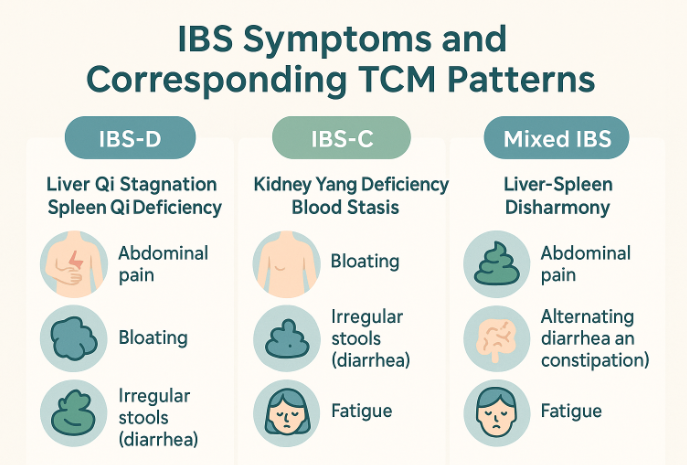
IBS types and corresponding Traditional Chinese Medicine patterns
Traditional Chinese Medicine doesn't see "IBS" as an illness; it instead determines imbalance patterns according to your constitution, lifestyle, and specific set of symptoms. Your qi or "chee" (life force) flows through certain paths named meridians, and when this motion is obstructed in gastrointestinal organs, certain syndromes may arise.
In TCM, there are three main organ systems that control your digestive system:
The Spleen (stomach and pancreatic functions): Assists in changing food to usable energy and transporting nutrients through your body.
The Stomach: Receives and starts to digest food and drinks.
The Liver: Promotes smoothness of emotions and qi and direct action upon digestive function when stressed or stagnant.
When we disturb these systems with diet, tension, emotion, or lifestyle issues, we may create symptoms we attribute to IBS.
The Root Reasons for IBS Elucidated using Chinese Medicine
How Do Diet, Stress, and Emotions Affect Digestive Energy?
New research regarding Chinese Herbal Therapy for Irritable Bowel Syndrome verifies what TCM has known for millennia: IBS mainly manifests as a result of some combination of various associated factors and not a sole cause. Most characteristic patterns are:
Liver Qi Stagnation: Once stress, anger, or emotion impedes smooth-flowing energy, digestion is impaired. Presenting with crampy pain moving around the abdomen with alternate constipation and loose stools, and worsening with tension.
Spleen Qi Deficiency: When your "digestive fire" is weak as a result of bad eating habits, chronic anxiety, or working too hard. Symptoms are torpor after eating, fullness, loose stool, and general feelings of heaviness.
Damp-Heat in the Intestines: Once damp-heat has formed based on inflammation and excessive dampness, typically as an effect of excessive greasy, hot, or processed food consumption. It causes abrupt diarrhoea, foul-smelling stool, and stinging pain.
What Role Does "Dampness" Play in IBS?
Dampness is excessive moisture buildup when the fluid metabolism in your body gets weak, according to TCM teachings. Hot and humid lifestyles (New York summers!), excessive consumption of raw and cold foods, and weak digestive capacity can all lead to dampness, and it shows up as: Sticky, unterminated bowel movements
Sticky, incomplete bowel movements
Feeling heavy and sluggish, especially after meals
Bloating that's worse in damp weather.
Thick tongue coating and a heavy feeling in the head
👉Considering what type of pattern would characterize your IBS symptoms? Our herbal medicine consults allow individual evaluation to determine your individual imbalance.
Evidence-Based TCM Treatments for IBS
What Does the Research Say About Acupuncture for IBS?
Ground-breaking 2025 clinical trial research published in Clinical Gastroenterology and Hepatology followed 280 IBS-D (diarrhoea-predominant) patients for 18 weeks. The researchers found patients receiving acupuncture had a 57.9% response when compared to 41.4% receiving sham acupuncture, and symptom relief for abdominal pain and stool consistency was sustained at follow-up.
How acupuncture helps IBS:
Regulates the gut-brain axis: Reduces visceral hypersensitivity and calms nervous system responses that trigger IBS symptoms
Improves digestive motility: Helps normalize the speed and coordination of intestinal contractions
Reduces inflammation: Modulates immune responses and reduces intestinal inflammation
Balances neurotransmitters: Affects serotonin, dopamine, and other brain chemicals involved in gut function
Common acupuncture points for IBS include:
ST36 (Zusanli): Strengthens digestive function and boosts energy
ST25 (Tianshu): Directly affects large intestine function and bowel regularity
SP6 (Sanyinjiao): Supports spleen function and reduces dampness
LI4 (Hegu): Provides pain relief and regulates bowel movements
Which Herbal Formulas Are Most Effective?
A 2021 meta-analysis reviewing Chinese herbal medicine for IBS management compared 10 high-quality studies involving 2,501 participants. The trials showed Chinese herbal medicine significantly decreased overall IBS symptoms by 76% compared with a placebo to achieve satisfactory relief, and with strong evidence to decrease abdominal pain, particularly.
Classical formulas used for IBS:
Tong Xie Yao Fang ("Painful Diarrhoea Important Formula"): The most researched formula for IBS-D, consisting of white atractylodes, white peony, tangerine peel, and saposhnikovia root. Many studies show dramatic relief from diarrhoea, pain and bloating.
Bao He Wan ("Preserve Harmony Pills"): For digestive stagnation with bloating, belching, and irregular stools, especially after overeating or consuming rich foods.
Liu Jun Zi Tang ("Six Gentlemen Decoction"): Strengthens digestive function in people with chronic weakness, poor appetite, and loose stools.
Ma Zi Ren Wan ("Hemp Seed Pills"): For chronic constipation, especially in elderly patients or those with dry, difficult-to-pass stools.
These formulas work over time by acting upon intrinsic constitutional weaknesses rather than symptomatically repressing them. Improvements are usually observed within 2-4 weeks, with the best benefits being achieved with 8-12 weeks of consistent therapy.
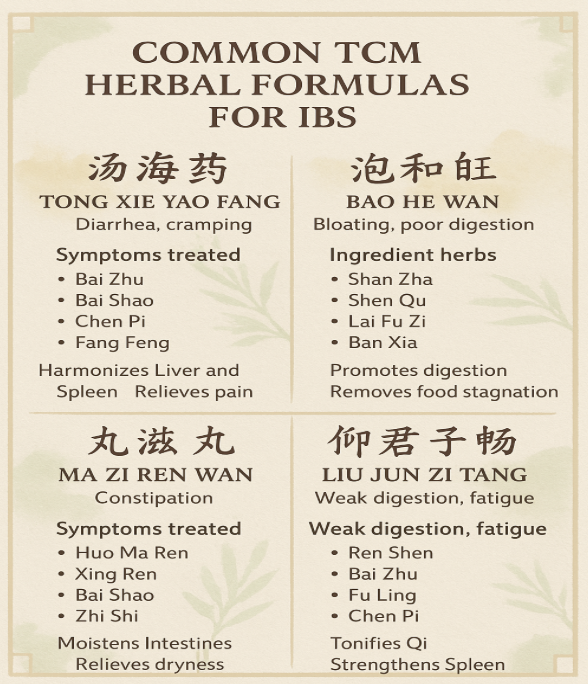
Traditional Chinese Medicine herbal formulas are commonly used for IBS treatment.
How Acupuncture and Herbs Compare to Conventional Treatment
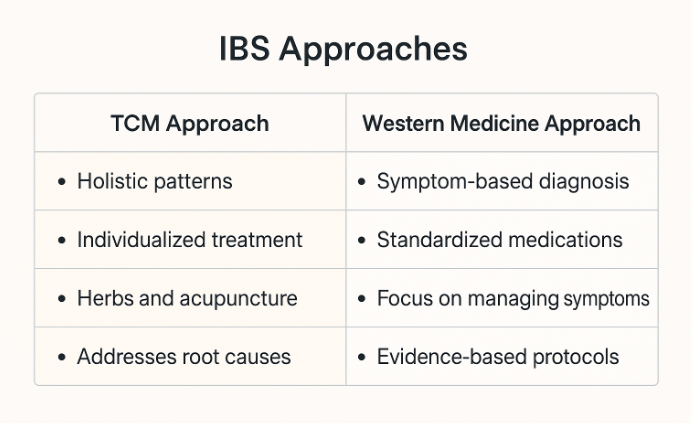
Comparison of Traditional Chinese Medicine and Western Medicine Approaches to IBS
Clinical Evidence Supporting TCM Integration
Recent research from Taiwan analyzing over 73,000 IBS patients found that those who used Traditional Chinese Medicine alongside conventional treatments had better long-term outcomes and lower healthcare costs. The study revealed that Chinese herbal medicine was the most commonly used complementary therapy, with Jia-wei-xiao-yao-san being the most prescribed formula.
A comprehensive review published in Frontiers in Pharmacology found that integrating TCM with conventional IBS treatments provided:
Higher response rates than either approach alone
Lower recurrence rates after treatment completion
Fewer side effects compared to pharmaceutical medications alone
Improved quality of life scores across multiple domains
TCM Dietary Wisdom for IBS
Understanding "Food Energetics" for Digestive Health
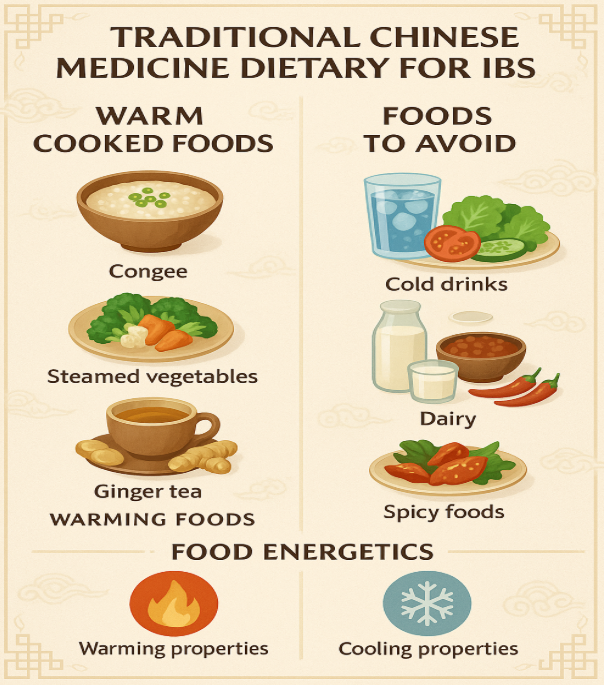
Traditional Chinese Medicine dietary guidelines for managing IBS symptoms
Traditional Chinese Medicine dietary guidelines for managing IBS symptoms
Traditional Chinese Medicine recognises that foods have inherent energetic properties that can either support or burden digestive function. Unlike elimination diets that focus on removing triggers, TCM dietary therapy emphasizes eating foods that strengthen your digestive "fire" and promote healthy qi circulation.
Foods that support digestive harmony:
Warm, cooked grains: Rice congee, oatmeal, quinoa prepared with warming spices
Gently cooked vegetables: Steamed carrots, squash, sweet potatoes, leafy greens.
Warming spices: Fresh ginger, cinnamon, cardamom, fennel seeds
Nourishing soups and broths: Bone broth, miso soup, vegetable broths
Room temperature or warm beverages: Herbal teas, warm water with lemon
Foods that tend to create digestive imbalance:
Cold and raw foods: Ice cream, cold drinks, raw salads, smoothies
Greasy and fried foods: Fast food, heavy oils, rich sauces
Refined sugars and processed foods: Candy, pastries, artificial ingredients
Difficult-to-digest combinations: Fruit with meals, too many different foods at once
The key is eating in a way that supports your individual constitution rather than following universal restrictions.
👉Want personalized dietary guidance for your digestive patterns? Our herbal consultations include customized nutrition recommendations based on your unique TCM pattern.
Your IBS Treatment Experience at Open Care Community
What to Expect During Community vs. Private Sessions
We present you with two different options that suit your budget and requirements:
Community Acupuncture: Most popular of our offerings by far, community acupuncture is conducted in a peaceful communal setting where you sit up in a recliner with other individuals. With this model, we're able to make the treatments available at a sliding scale of $50–$90 per visit (with a one-time +$15 first-visit fee). We never demand income verification–we take it on faith that you pay what you're capable of affording. It's an affordable way of receiving the regular care that you require in order to achieve long-term outcomes.
Private Acupuncture: Private treatments are offered for patients who prefer a personal and private setting or wish to have more time with the practitioner and consulting, and also treatments of back points.
The Herbal Consultation Process
Our licensed herbalists conduct comprehensive assessments that include:
Detailed symptom analysis: When, where, and how your IBS symptoms occur
Constitutional assessment: Your overall energy levels, sleep quality, and stress patterns
Traditional diagnostics: Tongue and pulse examination to identify your specific TCM pattern
Lifestyle review: Diet, work stress, exercise habits, and emotional patterns
Custom formula creation: Personalized herbal prescriptions targeting your unique imbalances
Timeline for Improvement
Most patients experience improvement following this general pattern:
Weeks 1-2: Initial reduction in symptom severity and frequency
Weeks 3-6: Noticeable improvement in energy and digestive comfort
Weeks 8-12: Substantial symptom resolution and improved quality of life
3-6 months: Stable, sustained improvement with minimal flare-ups
Safety and Integration with Conventional Care
Is Chinese Medicine Safe for IBS?
The TCM therapies for IBS are excellent, safety-wise, when practised by trained practitioners. The 2021 meta-analysis revealed that when compared with placebo, herbal medicine was associated with mildly increased adverse events (primarily mild gastrointestinal symptoms during the first week), but no serious adverse events were reported.
Our safety protocols include:
All practitioners are New York State-licensed acupuncturists
Herbs are sourced from FDA-registered facilities with third-party testing.
Comprehensive health screening before treatment
Coordination with your existing healthcare providers when requested
Can TCM Work Alongside Conventional Treatments?
Yes! Most of our patients continue their conventional IBS treatments while adding TCM support. Research consistently shows that integrated approaches provide better outcomes than either system alone. We coordinate care with gastroenterologists, primary care physicians, and mental health providers as needed.
Beyond IBS: Holistic Digestive Wellness
Many patients find that addressing their IBS through TCM opens the door to broader health improvements. As digestive function stabilizes and qi circulation improves, patients often experience:
Better sleep quality and more stable energy throughout the day
Improved stress resilience and emotional balance
Enhanced immune function and fewer minor illnesses
Greater body awareness and ability to prevent symptom flare-ups
👉We believe at Open Care Community that your gut health is at the root of all your well-being. Our program shows respect for the intricacy of IBS and for the healing power innate to all bodily tissues and provides you with tools and support for lifelong gastrointestinal balance.
✨New to IBS diagnosis? Or enduring symptoms for decades? There is relief with Traditional Chinese Medicine. Our sensitive, trained staff is ready to hear about your history, identify your individual patterns, and develop a system to suit you and your wallet.
Your next step is to book an appointment today.
📍Address: 44 Court Street, Suite 1000 (10th floor), Brooklyn, NY 11201
📧Email: info@opencarecommunity.com
📞Phone: (917) 426-1138
Booking: Book Online Here
FAQs
1. What is the Chinese medicine approach to IBS?
TCM views IBS as an imbalance involving the Spleen, Liver, and digestive Qi, often triggered by stress, diet, or emotional factors.
2. How does Chinese medicine help heal the digestive system?
It aims to strengthen digestion, regulate gut motility, reduce inflammation, and calm the nervous system using acupuncture, herbs, and food therapy.
3. Can acupuncture help relieve IBS symptoms?
Yes. Acupuncture may help reduce abdominal pain, bloating, constipation, diarrhoea, and stress-related flare-ups.
4. What Chinese herbs are used for IBS?
Common formulas may include herbs that soothe the Liver, strengthen the Spleen, and regulate digestion, prescribed individually by a practitioner.
5. How can Chinese medicine relieve IBS stomach discomfort?
By addressing stress-induced tension, food stagnation, and gut sensitivity, helping the digestive system function more smoothly.
6. What is IBS called in Chinese medicine?
IBS does not have a single name but is often described using patterns like “Liver overacting on the Spleen” or “Spleen Qi deficiency.”
7. Is Chinese medicine safe for IBS?
When guided by a qualified practitioner, Chinese medicine is generally safe and tailored to individual symptoms and sensitivities.
.
