How Can Chinese Medicine Help Improve Skin Health and Treat Acne Naturally?
Dealing with ongoing acne and skin conditions can be an exhausting and very personal journey. After trying out what seems like every topical cream, face wash, prescription, and conventional method with disappointing results, it can be disheartening. Many of these treatments intend to alleviate symptoms, focusing on the external surface and possibly leading to further irritation and dryness without addressing the root causes of the breakouts. What if you dig a little deeper to understand and treat skin health?
For thousands of years, Traditional Chinese Medicine (TCM) has provided a perspective that views the skin as a reflection of the body's internal equilibrium. While most treatments work with and treat the occasional pimple, TCM asks, "Why is the pimple there in the first place?" It’s a holistic, time-tested approach aiming to restore balance from the inside out, providing healthier-looking skin over time.
At Open Care Community, we don't view TCM as a replacement for Western dermatology; instead, we think of it as a powerful, complementary healing opportunity. It's about understanding your unique constitution and giving you tools to support your body's natural healing process. If you want a gentler and more holistic approach to skin health, consider taking a step towards TCM with our custom Herbal Consultations or accessing our Community Acupuncture services that are easily accessible and affordable.
What is acne from a Chinese medicine perspective?
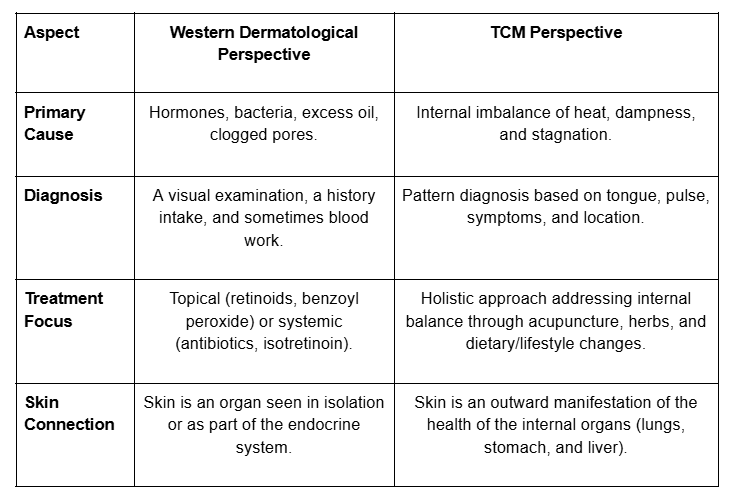
Western medicine considers the primary causes of acne to be hormones, bacteria, and the overproduction of sebum. However, Chinese medicine considers the whole body's landscape. Chinese medicine's "pattern diagnosis" recognizes that imbalances in the body manifest in the skin and identifies why the imbalance occurred in the first place.
How does TCM conceptualize acne differently from Western dermatology?
There is no single underlying cause for acne in TCM. Rather, breakouts are signs and symptoms of a deeper disharmony, and the goal is to identify specific patterns that revolve around ideas like Qi (vital energy), blood, and bodily fluids. Acne is typically the result of the three following factors:
Internal Heat: Internal Heat is sometimes described in Western terms as inflammation. It is the body’s response to stress, food, or hormonal fluctuations. The internal heat rises and creates angry, red, painful pimples on the skin.
Dampness: Dampness refers to an accumulation of pathological fluid caused by a less-than-optimal digestive system. In terms of skin pathology, it can be seen as oily skin, pustules, and, in severe cases, deep cystic acne that takes a long time to heal.
Stagnation: Stagnation implies that energy (Qi) and blood are not flowing properly or smoothly. When circulation is less than optimal, circulation may become less efficient, and the skin is not able to receive nourishment. This can lead to dark purple acne and will commonly be associated with scarring or post-inflammatory pigmentation.
What are common TCM patterns of acne?
A licensed TCM practitioner may identify a specific pattern based on the location, color, and type of breakouts. Here are some common patterns:
Lung Heat: Presents as small, inflamed red pimples on the forehead and cheeks. This pattern is associated with the TCM Lung system, which governs the skin and can be sensitive to external heat and toxins.
Stomach Heat: Usually manifests as pustules and inflamed acne around the mouth, chin, and chest. It is often associated with a diet that includes greasy, spicy, or processed foods that create excess heat in the digestive system.
Blood Stagnation: Deep, painful, nodular acne with dark spots or scarring is generally a sign of Blood Stagnation. Poor circulation can drive this pattern, which can also be worsened by hormonal issues or chronic inflammation.
Damp-Heat: Damp-Heat is a mixed pattern that will generally present with oily, inflamed, and often cystic acne that can exist anywhere on the face and/or body. It indicates inflammation that is related to a compromised digestive or metabolic system.
Which Chinese Medicine treatments improve skin health?
Once your pattern has been identified, your practitioner can provide a customized treatment plan. The plan is to clear heat, drain dampness, and promote the flow of Qi and blood to nourish the skin.
How can acupuncture assist in treating acne?
Acupuncture entails the insertion of ultra-fine, sterile needles into specified points on the body. When used for acne, this practice is particularly effective because acupuncture:
Reduces Inflammation: Studies suggest that certain acupuncture points have potent anti-inflammatory properties, calming the redness and swelling associated with a breakout.
Balances Hormones: Acupuncture may influence neuroendocrine signaling, which can stabilize the hormones causing cyclical or long-lasting acne, particularly along the jawline.
Calms the Central Nervous System: Stress is a significant cause of acne. Acupuncture stimulates the parasympathetic nervous system (the "rest and digest" mode), which may help regulate stress responses and therefore lessens the impact that stress has on your skin.
Improves Circulation: Acupuncture stimulates circulation to the skin, allowing greater blood flow to deliver oxygen and nutrients that facilitate healing and support circulation and tissue nourishment.
What herbal remedies are typically used for acne?
Herbs are at the heart of TCM dermatology. Instead of using single ingredients, Chinese herbs are typically combined in complex prescriptions that enhance one another's qualities. The formula is tailored to your pattern of imbalance. Our practitioners can discuss whether pre-set herbal options may be appropriate.
Important Note: Chinese herbs are powerful medicines. We always recommend consulting a licensed herbalist for a specific prescription. Our trained staff at Open Care Community in Brooklyn will help guide you to the right formula for your individual needs.
Can food therapy and lifestyle changes in Chinese medicine be beneficial for the skin?
Definitely. TCM is based on the belief that food is medicine. What you consume influences the internal environment of your body. Your practitioner may suggest:
Skin Cooling Foods: Foods that clear heat include cucumber, mung beans, mint, celery, and pear.
Dampness Eliminating Foods: For digestion, the best suggestions will be lightly cooked vegetables, barley, adzuki beans, and bitter greens.
Foods to Avoid: Generally, practitioners may suggest reducing the consumption of foods that promote heat and dampness, including certain dairy, sugar, greasy or fried foods, spicy meals, and alcohol.
Lifestyle Changes: Basic lifestyle changes will also help skin health, such as getting sufficient sleep (7-8 hours is when your body repairs itself), managing stress through gentle movement or meditation, and plenty of hydration.
What results might patients expect from TCM treatments for acne?
Healing with Chinese medicine operates on a different timescale; it is not a quick-fix solution but an ongoing process that requires patience and commitment.
How long does it usually take for patients to see skin improvements?
While some patients report a reduction in inflammation and stress levels after one or two sessions, visible skin changes typically take longer. For chronic or obstinate acne, the standard course of treatment usually involves a series of regular acupuncture visits over several weeks. The improvements are gradual; at first, you may notice that new breakouts are less frequent and less inflamed. Over time, your skin will become more balanced, and you will notice improvements in its overall texture and clarity.Will Chinese medicine help reduce existing acne scars or post-inflammatory hyperpigmentation?
Yes, acupuncture and herbal medicine are powerful at invigorating blood circulation, which helps repair damaged tissues and dissipate the dark or red marks that remain after a breakout.Is it safe to use TCM with regular skincare treatments?
Generally, TCM can be used safely with treatments from your dermatologist, such as topical retinoids or spironolactone. An integrated approach can be an effective option. It is important that all your healthcare providers are in constant dialogue. Always alert your TCM practitioner to any medications you are taking, as some Chinese herbs can possibly interact with prescribed medications.
Can bodywork such as Gua Sha and cupping enhance skin?
Bodywork therapies are also an important part of the TCM toolbelt for clarifying skin by supporting the smooth flow of energy and fluid within the body.
How will facial Gua Sha support skin health? Gua sha involves a gentle scraping of the skin using a smooth, flat tool typically made of jade or rose quartz. When used on the face, it can release jaw and brow muscle tension, assist lymphatic drainage to help support lymphatic movement, reduce puffiness, promote micro-circulation, and help reduce inflammation in acne-prone areas.
Can cupping therapy be helpful for detoxing the skin and body? Cupping uses suction to pull stagnant blood and metabolic waste toward the surface of the skin so your body can eliminate it. Facial cupping typically uses gentle suction to move or release lymph. When cupping is used on the body, like on the back, it can help stimulate the organ systems related to skin health. Using cupping to help relieve stagnation from the channels connected with the lungs and digestive system supporting circulation and lymphatic flow.
Are there risks or contraindications with Chinese Medicine for acne?
Generally, Chinese Medicine is considered safe when practiced by licensed professionals but here are a few things to keep in mind:
Who shouldn't use certain herbs or treatment approaches?
It's important to know that some herbs are contraindicated for use in pregnancy, and formulas or treatments would be changed when a patient has sensitivities or a complex medical history. That's why we don't recommend self-prescribing based on what you read on the internet. A licensed practitioner will do a thorough intake process to ensure that your Chinese Medicine treatment plan is safe and effective for you.How can I find a qualified Chinese medicine practitioner that I can trust?
Look for a practitioner who is licensed in their state (LAc means licensed acupuncturist) and who has board certification from the NCCAOM (National Certification Commission for Acupuncture and Oriental Medicine). At Open Care Community, all of our practitioners are properly licensed and committed to providing expert and compassionate care in a judgment-free space.
What scientific evidence is there for using Chinese medicine for acne?
While TCM has been practiced for thousands of years based on empirical evidence, modern research is starting to catch up and support its mechanisms and effectiveness.
Are there clinical studies that support acupuncture for acne? Yes. A systematic review published in PubMed concluded that acupuncture therapy is a helpful complementary option for acne vulgaris. The studies found that acupuncture can reduce inflammatory lesion counts and regulate sebum production, likely by adjusting neuropeptides and hormones related to the skin's inflammatory response.
What does the body of research tell us about Chinese herbal medicine (CHM) and acne?
Systematic reviews of clinical trials show that CHM can be a useful treatment for mild to moderate acne with fewer side effects than standard medications. Common herbs such as Jin Yin Hua (Honeysuckle Flower) and Pu Gong Ying (Dandelion) have also been studied for their natural antibacterial and anti-inflammatory properties.Can holistic methods like TCM improve quality of life in people with acne?
When treating acne, clearing lesions is often a priority; however, TCM is holistic and treats the person as a whole. People with acne often experience stress, anxiety, and low self-esteem. Acupuncture and other TCM modalities calm the nervous system and balance emotions, ultimately improving a patient's overall well-being and resilience to stress, which may be a vital yet often neglected part of the healing process.
What can I do today to start using Chinese medicine for skin health?
Are you ready to take the first step toward clearer skin? Starting is easy.
How do I get started on a Chinese medicine skin plan?
Book an Initial Appointment: This is an important first step. The practitioner will do a thorough intake, and together, you will develop a plan that is right for you.
Begin with Gentle Acupuncture: Community acupuncture is a great way to experience the healing benefits of treatment in a calm, collective space.
Keep a Skin Journal: Document how your skin responds to food, stress, and your menstrual cycle. This information is invaluable for your practitioner.
Drink Skin-Calming Teas: Drinking simple teas like mint, chamomile, or chrysanthemum can help clear heat and calm the nervous system.
Where can I find accessible, affordable Chinese Medicine care?
We believe that healthcare is a human right, not a privilege.
Open Care Community is located in Downtown Brooklyn and offers sliding-scale community acupuncture, herbal consultations, and acupuncture sessions for all skin types—and for all income levels. We aim to provide access to care because we believe this medicine can be very powerful, and we want to make it accessible to everyone.
Ready to investigate a holistic, root-cause remedy for acne?
Reserve your herbal consultation or acupuncture appointment to begin with the nurturing team at Open Care Community in Brooklyn. We intend to support your skin—and your whole self.
FAQs
1. How does Chinese medicine treat acne?
TCM treats acne by identifying patterns such as heat, dampness, hormonal imbalance, or digestive weakness, and correcting them with acupuncture, herbs, and dietary therapy.
2. Can Chinese medicine treat skin problems?
Yes. Chinese medicine is commonly used to support acne, eczema, rosacea, dryness, and inflammatory skin conditions by restoring internal balance.
3. How can you cure acne naturally and permanently?
While no approach guarantees permanent results, addressing hormones, gut health, stress, and inflammation with consistent natural care may lead to long-term improvement.
4. What Chinese herbs are good for skin?
Commonly used herbs include honeysuckle, chrysanthemum, dandelion, licorice root, and peony, selected based on individual skin patterns.
5. Is acupuncture effective for hormonal acne?
Yes. Acupuncture can help regulate hormones, reduce stress-related breakouts, and improve circulation to the skin.
