How Can Cupping Help with Jaw Tension and TMJ Relief ?
Introduction
After months of waking up with jaw pain from grinding her teeth during stressful work deadlines, Maria discovered something unexpected: relief came not from another night guard or prescription, but from an ancient therapy called cupping. Like many New Yorkers dealing with the daily pressures of city life, Maria's jaw had become a repository for tension she didn't even realize she was carrying. What she found at Open Care Community in Downtown Brooklyn was a gentle, effective approach that addressed not just her symptoms, but the underlying muscle tension contributing to her TMJ disorder.
Temporomandibular joint (TMJ) disorders affect over 10 million Americans, causing jaw pain, clicking sounds, headaches, and difficulty eating or speaking. While conventional treatments often focus on managing symptoms, cupping therapy offers a holistic approach that addresses the muscular and circulatory factors contributing to jaw tension. At Open Care Community, we've seen firsthand how this traditional therapy can provide meaningful relief for patients seeking natural alternatives or complements to conventional TMJ care.
Our sliding-scale bodywork services ($50–$90, +$15 first visit) make cupping therapy accessible to everyone in our diverse Brooklyn community, because we believe that relief from chronic pain shouldn't depend on your ability to pay.
👉 Looking for personalized care and guidance? Book a consultation at Open Care Community in Downtown Brooklyn.
Understanding TMJ Disorders and Jaw Tension
What Is TMJ and How Does It Differ from General Jaw Pain?
TMJ disorders encompass a group of conditions affecting the temporomandibular joint—the complex hinge mechanism that connects your jawbone to your skull. Unlike simple jaw soreness, TMJ disorders involve dysfunction in this joint system, often accompanied by problems with the surrounding muscles, ligaments, and cartilage.
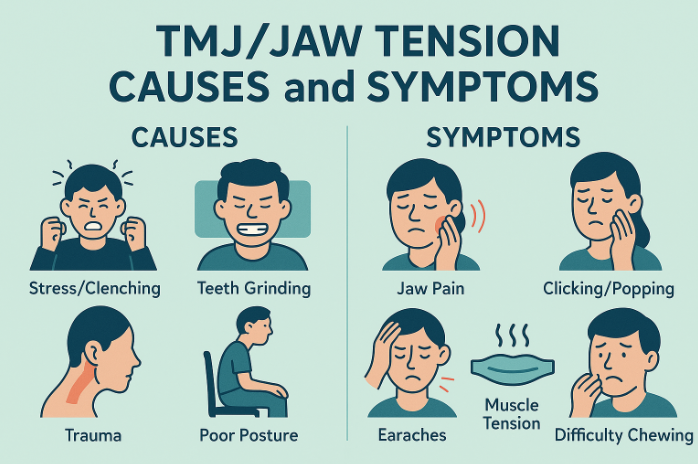
Common causes and symptoms of TMJ disorders and jaw tension
What Common Factors Contribute to Jaw Tightness?
The most frequent contributors to TMJ disorders include:
Stress-related clenching and teeth grinding (bruxism): The pressures of urban living—subway delays, work deadlines, financial concerns—often manifest as unconscious jaw tension, particularly during sleep.
Poor posture and "tech neck": Hours spent hunched over computers or looking down at phones create forward head posture, which places additional strain on jaw muscles and the TMJ.
Trauma and dental issues: Car accidents, dental procedures, or even aggressive dental work can trigger TMJ problems.
Dietary factors: Regularly chewing hard foods, gum, or ice can overwork jaw muscles and contribute to joint dysfunction.
What Triggers Make TMJ Symptoms Worse?
Common aggravating factors include:
Sleeping on your stomach or side without proper neck support
Stress and anxiety that increase muscle tension
Caffeine intake, which can increase muscle tension and clenching
Talking extensively or yelling (common for teachers, performers, or customer service workers)
What Is Cupping Therapy and How Does It Work?
The Ancient Roots of Cupping
Cupping therapy has been used for over 3,000 years across cultures, from ancient Egypt to China and many places in between. The technique involves placing glass, bamboo, or plastic cups on the skin and creating suction to draw tissue upward into the cup.
How Cupping Works on Biological and Energetic Levels
From a biomedical perspective, cupping creates several measurable effects:
Tissue decompression: The negative pressure separates tissue layers, releasing fascial adhesions and improving mobility
Increased blood circulation: Suction draws blood to the treated area, delivering fresh oxygen and nutrients while removing metabolic waste
Lymphatic drainage: The lifting action promotes lymphatic flow, reducing inflammation and swelling
From a Traditional Chinese Medicine perspective, cupping moves stagnant qi (your energy) and blood, particularly beneficial for conditions involving muscle tension and pain. When qi becomes "stuck" due to stress, poor posture, or trauma, symptoms like jaw tension, headaches, and muscle pain can result.
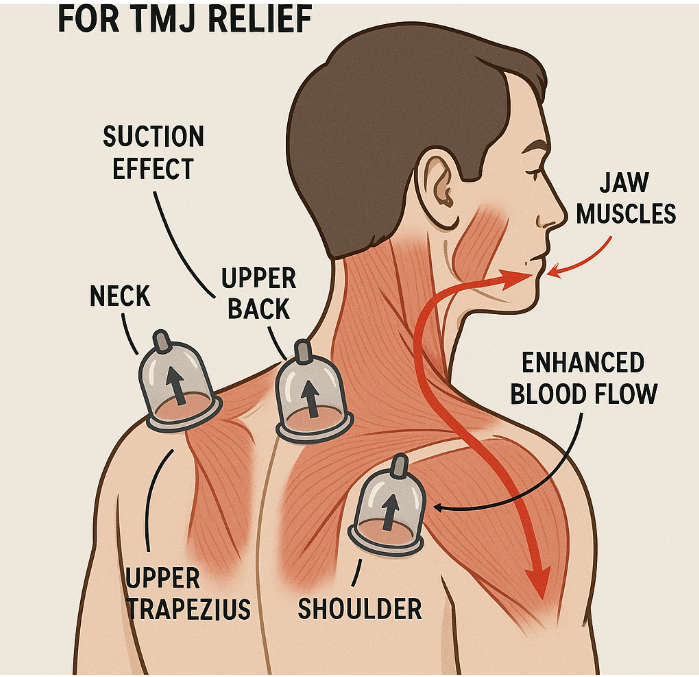
Cupping therapy application areas for TMJ and jaw tension relief
Why Cupping Is Particularly Effective for Muscle Tension
A 2021 clinical study published in Evidence-Based Complementary and Alternative Medicine found that cupping combined with acupuncture was most effective for treating muscle-related TMJ pain compared to other acupuncture approaches alone. The negative pressure created by cupping provides unique benefits for muscle tension by:
Lifting and separating muscle fibres
Breaking up fascial adhesions that restrict movement
Promoting the release of trigger points
Enhancing the body's natural healing response
👉Not sure if cupping is right for you? You can schedule a bodywork consultation at Open Care Community to get a personalized recommendation.
How Cupping Specifically Helps TMJ and Jaw Tension
Where Is Cupping Applied for TMJ Symptoms?
For TMJ-related issues, cupping is typically applied to:
Neck and cervical spine: Releasing tension in the deep neck muscles that connect to jaw function
Upper trapezius muscles: Addressing the shoulder and neck tension that often accompanies TMJ disorders
Suboccipital region: Targeting the small muscles at the base of the skull that can refer pain to the jaw
Upper back and between shoulder blades: Improving overall posture and reducing compensatory muscle tension
While facial cupping can occasionally be used by experienced practitioners, most TMJ relief comes from addressing the connected muscle groups in the neck and shoulders rather than working directly on the jaw itself.
What Are the Physical Benefits of Jaw Tension?
Research published in the International Journal of Molecular Sciences demonstrates that cupping therapy can:
Improve local blood circulation by up to 300% in treated areas
Reduce inflammatory markers associated with chronic muscle tension.
Decrease muscle spasm and trigger point activity in the neck and jaw muscles.
Enhance tissue oxygenation and nutrient delivery to stressed muscles.
Can Cupping Relieve Related Symptoms?
Many patients find that cupping helps with TMJ-associated symptoms, including:
Tension headaches: Often caused by tight neck and jaw muscles
Ear pain or pressure: Resulting from jaw muscle tension affecting nearby structures
Neck stiffness: Contributing to and resulting from jaw dysfunction
Sleep disruption: From nighttime clenching and grinding
How Does Cupping Compare to Other TMJ Treatments?
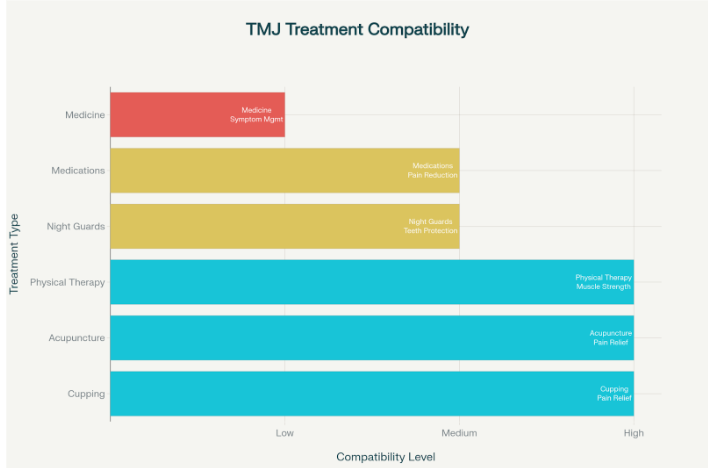
Comparison of different TMJ treatment approaches and their benefits
A 2023 evidence-mapping study reviewing 14 meta-analyses found moderate-quality evidence supporting cupping therapy for various pain conditions, noting that it represents "a promising, safe, and effective non-pharmacological therapy". Unlike medications that mask symptoms or appliances that simply protect teeth, cupping addresses underlying muscle tension and circulation issues contributing to TMJ disorders.
What to Expect During a TMJ-Focused Cupping Session
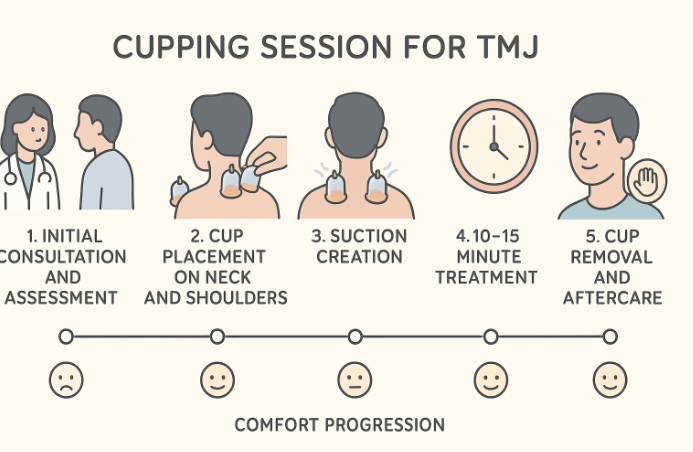
What to expect during a cupping therapy session for TMJ relief
Your First Cupping Visit
During your initial consultation at Open Care Community, we'll:
Review your TMJ symptoms, pain patterns, and triggers
Assess your posture and muscle tension through gentle palpation
Discuss acupuncture vs. cupping for treatment relief.
Explain the treatment process and answer any questions.
Customize the treatment approach based on your specific needs.
The Treatment Process
A typical TMJ-focused cupping session involves:
Preparation: You'll lie comfortably face down while we identify optimal cup placement sites. This is done by palpating the muscles on your back, shoulders and neck.
Cup application: Plastic or silicone cups are placed on specific points along your neck, shoulders, and upper back.
Suction creation: We create gentle negative pressure using a manual pump. Your practitioner will check to make sure that the cups are comfortable.
Treatment time: Cups remain in place for 10-15 minutes, during which many patients find the sensation deeply relaxing.
Cup removal and aftercare: Cups are carefully removed, and we may apply a gentle massage to the treated areas.
Is Facial Cupping Used for TMJ?
While some practitioners use gentle facial cupping techniques, we typically focus on the neck and shoulder areas for TMJ treatment. This approach is safer, avoids visible marking on the face, and often provides better results by addressing the muscular connections that contribute to jaw tension. Facial cups are generally used for cosmetic treatments more than muscular-skeletal disordrs.
How Many Sessions Are Typically Needed?
Most patients notice some improvement after their first cupping session, with optimal results typically achieved through:
Acute TMJ flare-ups: 2-4 sessions over 2-3 weeks
Chronic jaw tension: 6-8 sessions over 6-8 weeks
Maintenance care: Monthly sessions to prevent recurrence
Safety and Side Effects of Cupping for TMJ
Is Cupping Safe for Everyone?
Cupping therapy has an excellent safety profile, with research showing minimal adverse effects when performed by trained practitioners. However, certain individuals should avoid cupping:
People taking blood-thinning medications
Those with skin conditions or open wounds in treatment areas
Pregnant women (first trimester)
Individuals with certain cardiovascular conditions
What Are the Temporary Side Effects?
The most common effects of cupping include:
Circular marks or bruising: These painless marks typically fade within 3-7 days
Temporary soreness: Mild muscle soreness similar to post-exercise sensation
Slight fatigue: As the body processes released toxins and adjusts to improved circulation
At Open Care Community, we always explain these temporary effects before treatment and provide aftercare instructions to minimize any discomfort.
Research Support and Patient Experiences
What Does Clinical Evidence Show?
A comprehensive 2021 study comparing different acupuncture methods for TMJ disorders found that cupping combined with acupuncture provided superior results for muscle-related jaw pain. The research demonstrated:
Significant improvements in pain levels across all treatment groups
Enhanced effectiveness when cupping was added to traditional acupuncture
Sustained benefits lasting 4 weeks after treatment completion
Real Patient Story from Open Care Community
Mev Luna: "In the past, I haven't had consistent access to acupuncture, largely because it's been cost-prohibitive. Open Community Care makes this accessible at a sliding scale.
Prior to this new space opening, I had been going to Jenny Kim for two years for both acupuncture and cupping. When I first started receiving the care, my tendinitis was unbearable and I was in excruciating daily pain. I was unable to do any activities after a workday. Her approach has made all the difference! Not only has my tendinitis become manageable, but my stress levels have decreased, my digestion has improved, and overall, my quality of life and ability to show up both at work and socially are leaps and bounds better.
Within the field of practice, Jenny Kim is one of the most talented and phenomenal practitioners. She’s highly skilled, intuitive, and creates a comfortable environment to receive this important care. A community supported acupuncture centre is an incredible resource for Brooklyn. Could not recommend highly enough! Oh, and they also have a highly curated and thoughtful selection of herbs, tinctures, supplements, etc."
Is Cupping Better Alone or Combined with Other Treatments?
Research consistently shows that cupping works well both as a standalone therapy and in combination with other treatments. At Open Care Community, we often integrate cupping with:
Acupuncture for comprehensive nervous system support
Gua sha for additional myofascial release
Herbal medicine to address internal inflammation and stress
Lifestyle counselling for stress management and ergonomic improvements
Want personalized TMJ support from practitioners who listen? Meet our compassionate team and begin with a low-cost community care session.
Open Care Community's Approach to TMJ Care
What Sets Our Bodywork Services Apart?
Located in the heart of Downtown Brooklyn at 44 Court Street (10th floor), Open Care Community offers:
Sliding-scale pricing that makes regular cupping treatments affordable
No income verification required—we trust patients to pay what they can
Licensed, experienced bodywork therapists specializing in TMJ and chronic pain
Trauma-informed, inclusive care welcoming all bodies and identities
Integration with acupuncture and herbal medicine for comprehensive support
✨We serve patients throughout Brooklyn and NYC, with convenient access via multiple subway lines (A/C/F/R/2/3/4/5).
Your Path to Natural TMJ Relief
Living with jaw pain and TMJ dysfunction doesn't have to be your new normal. Cupping therapy offers a gentle, effective approach that addresses the muscular and circulatory factors contributing to your symptoms while supporting your body's natural healing capacity.
At Open Care Community, we understand that TMJ disorders affect more than just your jaw—they impact your sleep, your ability to eat comfortably, your work performance, and your overall quality of life. That's why our approach looks beyond symptoms to address the whole person, combining ancient wisdom with modern safety standards.
Whether you're dealing with stress-related jaw clenching, chronic TMJ pain, or looking for natural alternatives to complement your current treatment, our experienced team is here to support your healing journey with compassion and expertise.
Ready to explore jaw tension relief the natural way? Book your cupping or acupuncture appointment at Open Care Community today—no insurance or income qualifications required.
Book an appointment today:
📍Address: 44 Court Street, Suite 1000 (10th floor), Brooklyn, NY 11201
📧Email: info@opencarecommunity.com
📞Phone: (917) 426-1138
FAQs
1. How does cupping help TMJ?
Cupping improves local blood flow, releases muscle adhesions, and reduces inflammation in the jaw, neck, and shoulder muscles that often contribute to TMJ pain.
2. How can you release tension from TMJ naturally?
TMJ tension can be eased with cupping, acupuncture, gentle jaw stretches, stress management, posture correction, and heat therapy.
3. Does cupping release tight muscles?
Yes. Cupping helps separate tight muscle fibers, increase circulation, and reduce fascial restriction, making it effective for chronic muscle tension.
4. Can acupuncture relieve jaw tension?
Yes. Acupuncture can relax the jaw muscles, reduce nerve sensitivity, and regulate the stress response that often worsens jaw clenching.
5. Is cupping painful on the jaw area?
Cupping on the jaw is typically gentle and well-tolerated. A trained practitioner uses lighter suction in sensitive facial areas.
