
The Role of the Spleen in Digestion (TCM Perspective)
What Is the Role of the Spleen in Digestion?
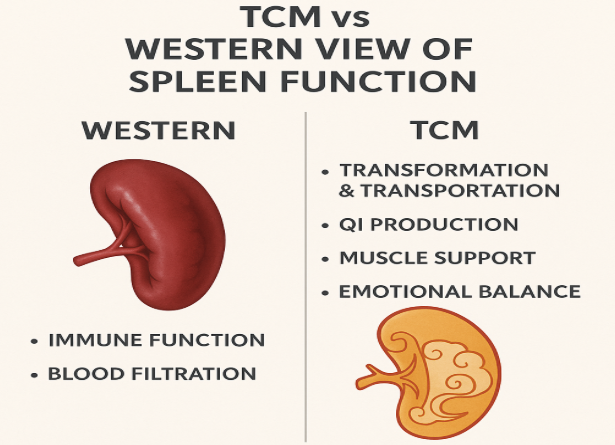
Did you know that in Traditional Chinese Medicine, your spleen does a whole lot more than Western medicine credits it for? While Western medicine regards the spleen mainly as an immune organ that purifies the blood, TCM sees the Spleen as the pillar of digestive function and energy generation. This ancient knowledge provides deep insights into why you may be feeling fatigued after eating, bogged down by bloating, or finding yourself subject to that post-lunch slump that has you scrambling for another cup of coffee.
At Open Care Community in Downtown Brooklyn, our practitioners educate patients on how their bodies work according to Traditional Chinese Medicine, with the Spleen at the centre of breaking down food into qi (your energy) and fueling your whole system. Our sliding-scale acupuncture visits ($50–$90, +$15 first visit) and herbal consultations bring this ancient knowledge within reach of anyone looking to boost their digestive health and overall energy.
👉Learn how acupuncture and herbal medicine at Open Care Community in Brooklyn can support your digestion and overall wellness. Book now.
How Traditional Chinese Medicine Understands the Function of the Spleen?
What Is the Definition of the 'Spleen' in TCM and Biomedicine?
The spleen in Western medicine is a compact organ hidden under your ribcage that assists in filtering blood and aids in immune function. Individuals are able to survive without the physical spleen, so Western medicine occasionally deems it "non-vital." In Traditional Chinese Medicine, though, the Spleen system is much more than the physical organ—it is a whole functioning network that is in charge of digestion, generating energy, and keeping the structural integrity of the body intact.
The Spleen of TCM regulates what practitioners refer to as "transportation and transformation"—the breaking down of everything that you eat (food, beverages, even emotions) into energy and nutrients that are used by your whole body. A study published in Evidence-Based Complementary and Alternative Medicine verifies that the TCM function of the Spleen corresponds to several physiological processes, including digestive functions, immune response, muscle metabolism, and even neurological processes.
Why Is the Spleen Considered the Foundation of Health in TCM?
In Chinese medicine philosophy, the Spleen is referred to as the "basis of postnatal life" since it's accountable for producing the energy that you require to live day by day. Unlike prenatal energy (which you inherit from your parents), postnatal energy needs to be recharged all the time via proper digestion. With a healthy Spleen function, you're full of energy, you think sharply, and you have stable moods. When it's not, everything else suffers.
The Spleen is responsible for producing the "acquired qi” as described in TCM—the energy obtained from food and air that powers your daily activities. This sheds light on why digestive issues tend to come with fatigue, lack of mental clarity, and weakened immune functioning.
What Organs Does the Spleen 'Team Up' With?
The Spleen works hand-in-hand with the Stomach to form the “Earth” pair of organs in TCM. The Stomach takes in food and begins its initial digestion (like a kettle that “ripens” the food). The spleen takes the nutrients, which the Stomach has begun to break down, and distributes them to the rest of the body. The energy of the Stomach moves downwards, while the energy of the Spleen moves upwards. This is balanced when both these organs work together.
How Does the Spleen Support Digestion in Chinese Medicine?
What Is Meant by the Spleen's Role in "Transportation and Transformation"?
Transportation and transformation are perhaps the most important concepts in understanding TCM digestion. The Spleen takes the "food essence" processed by the Stomach and transforms it into:
Qi (energy for daily activities)
Blood (nourishment for organs and tissues)
Body fluids (effective lubrication and hydration)
The "transportation" part means moving these processed substances around your body. When this works well, you feel energized after eating. When it doesn't work well, you might feel tired, bloated, or mentally unclear after meals.
How Does the Spleen Affect Absorption and Fluid Metabolism?
Your Spleen regulates not only nutrient absorption but also the metabolism of fluids within your system. According to TCM doctrine, "the Spleen separates the clear and turbid," or siphons out desirable nutrients while channelling wastes to be expelled. When the function of your Spleen is impaired, inappropriate collections of fluid can occur, resulting in:
Water retention and bloating
Loose stools or diarrhoea
Excessive mucus production
Heavy, sluggish feeling in the limbs
What Is the Connection Between the Spleen and 'Dampness'?
Dampness is a key pathological concept in TCM that often results from poor Spleen function. When the Spleen can't properly transform and transport fluids, moisture accumulates in tissues, creating symptoms like:
Sticky, loose stools
Feeling heavy or lethargic
Foggy thinking
Excessive worry or rumination
Yeast infections or skin conditions
Living in humid climates (like New York summers!) or eating too many cold, raw foods can overwhelm the Spleen's capacity to process fluids, leading to internal dampness.
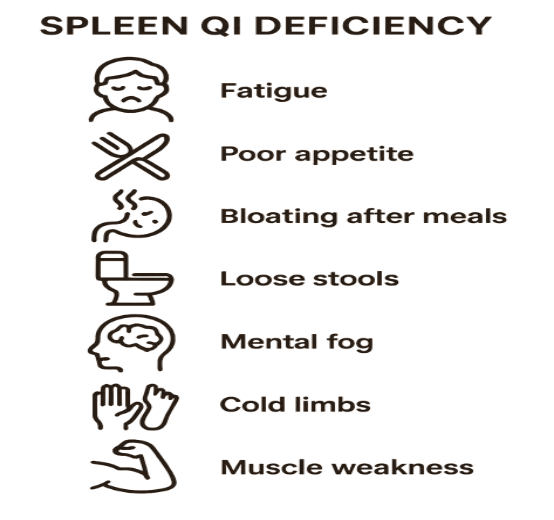
Common signs and symptoms of Spleen Qi deficiency in Traditional Chinese Medicine
Feeling low energy or dealing with digestive issues? Meet with one of our licensed acupuncturists at Open Care Community to better understand your Spleen Qi. Schedule a visit today.
What Are the Symptoms of Spleen Qi Deficiency in Traditional Chinese Medicine?
What is "Spleen Qi"? And why is it so essential in digestion?
Spleen Qi is the energy that gets your digestive system working smoothly. It is strong when you take in energy from your food readily, enjoy stable blood-sugar levels, and think with focus. It is low when the whole system slows down, with inefficient absorption of nutrients and low bodily energy.
Research shows that individuals with Spleen Qi deficiency are usually found to demonstrate remarkable changes in digestive efficacy. This includes a decrease in gastric acid synthesis, reduced effectiveness of pancreatic enzymes, and changes in intestinal motility.
Which physical and emotional signs suggest a lack of good Spleen Qi?
Physical symptoms of Spleen Qi deficiency include:
Loss of appetite or feeling full quickly
Fatigue, particularly after eating
Watery stool or diarrhoea
Frequent colds
Bloating and gas
Lead colic or lead colic colitis.s
Easy bruising
Cold hands and feet.
Emotional symptoms often include:
Excessive worry or anxiety
Difficulty concentrating
Emotional hunger or cravings for foods
Being stressed about daily work.
One study conducted in 2013 found that 34% of depression patients presented Spleen deficiency patterns. It shows that a link between mental health and intestinal conditions does exist.
How Does Spleen Qi Deficiency Impact Women's Health and Fertility?
The Spleen plays a crucial role in reproductive health by:
Producing blood necessary for healthy menstrual cycles
Maintaining proper circulation to the reproductive organs
Supporting hormone synthesis through nutrient absorption
Preventing prolapse of pelvic organs
Women with Spleen Qi deficiency often experience irregular periods, scanty menstrual flow, fatigue during menstruation, or difficulty conceiving. At Open Care Community, we frequently address Spleen function as part of comprehensive fertility support.
What Lifestyle Habits May Weaken Spleen Function?
Modern lifestyle factors that commonly damage Spleen Qi include:
Irregular eating patterns or skipping meals
Consuming cold foods and drinks (especially ice water with meals)
Eating while distracted (scrolling, working, watching TV)
Chronic stress and overthinking
Lack of physical activity
Excessive consumption of raw foods, dairy, or sugar
What Strengthens and Nourishes in the Spleen
What Dietary Principles Support the Spleen?
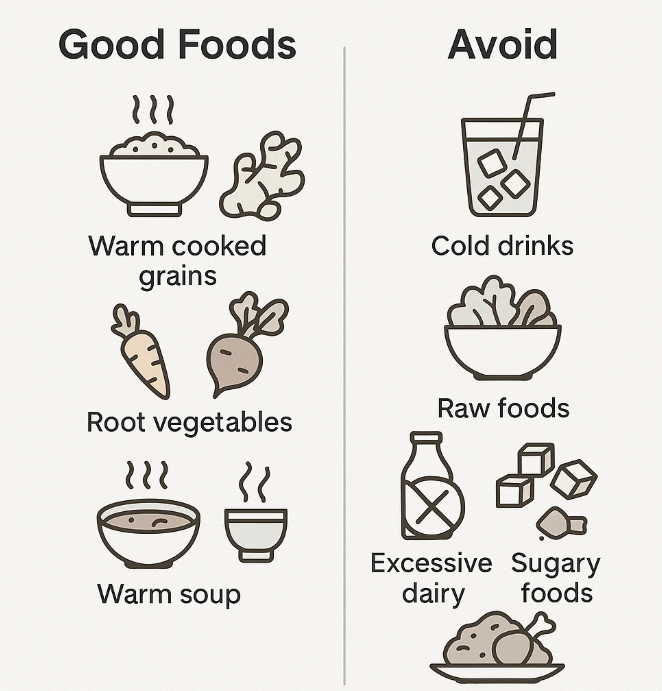
Foods that support or weaken Spleen Qi according to Traditional Chinese Medicine
Spleen-supporting foods are generally:
Warm and cooked rather than cold and raw
Mildly sweet (like root vegetables, not processed sugar)
Easy to digest and comforting
Consumed at regular times without rushing
Specific beneficial foods include:
Cooked grains (oats, rice, quinoa)
Root vegetables (sweet potato, carrots, squash)
Warming spices (ginger, cinnamon, cardamom)
Cooked legumes (lentils, adzuki beans)
Warm herbal teas (ginger, liquorice root)
Foods to limit for Spleen health:
Cold or iced drinks (especially with meals)
Excessive raw foods
Dairy products (which can create dampness)
Processed sugar and refined foods
Overeating or eating too quickly
How Can Acupuncture Help Tonify the Spleen?
Key acupuncture points for supporting Spleen function and digestion:
Acupuncture strengthens the function of the Spleen by activating some points that control digestive energy. Important points include:
ST36 (Zusanli): It lies below the knee and is known to aid digestion. Studies prove that it can help carry food up to the stomach, control gut hormones, and improve overall energy.
SP6 (Sanyinjiao): "Three yin intersection" location on inner ankle serves all yin organs, especially the transformative function of the Spleen.
SP3 (Taibai): It is a source point of the Spleen meridian, excellent to supplement core digestive capacity.
A randomised trial in 2019 showed that acupuncture at Spleen-supporting points helped patients who were suffering from chronic fatigue immensely in improving digestion and energy.
What Herbal Formulas Are Commonly Used to Strengthen Spleen Qi?
What can often be utilized to supplement Spleen Qi?
Si Jun Zi Tang, or( "Four Gentlemen Decoction" )is the chief formula for deficiency in Spleen Qi.
Liu Jun Zi Tang ("Six Gentlemen Decoction") adds Citrus peel and Pinellia to the formula for patients who have stronger digestive symptoms
👉If you experience bloating, chronic fatigue, or aspirations regarding having children, caring for your Spleen is crucial. Get personalized attention at Open Care Community. Call today to schedule your appointment.
How do emotions and stress affect the spleen in Traditional Chinese Medicine?
What emotions can cause a weak spleen?
Every organ system in Chinese medicine has related emotions. The Spleen's emotions include thinking too much and worry, which is to say that overthinking, brooding, and angst can damage digestion. This's not a figure of speech; research demonstrates chronic stress clearly has effects on gut function, immune activity, and nutrient absorption.
Common emotions that irritate Spleen Qi include:
Overthinking and analyzing everything
Long-term worry about things ahead
Perfectionism and hypercritical self-reflection
Emotional eating during stress
Problem "digesting" life experiences
How Does Stress Affect Digestion and Spleen Qi?
When stressed, your nervous system goes into "fight-or-flight," channelling energy away from digestion to immediate survival concerns. With TCM thinking, this disperses Spleen Qi and interferes with the smooth conversion of nutrition into energy. You may find:
Poor appetite when anxious
Digestive issues while feeling stressed.
Hankering for comfort foods while stressed
Stomach problems that become worse around deadlines or arguments.
What mindfulness exercises can help spleen energy?
Mindful eating: Focus intently on your meal without any distractions
Practice gratitude: Enjoy the nutrition that's going in.
Breathing exercises: Deep belly breathing before eating turns on digestion
Gentle movement: Tai chi and qigong help organs associated with the Earth element.
Journaling: Sort out feelings rather than "digesting" them physically
Can Spleen Imbalances Contribute to Chronic Health Conditions?
How Are Fatigue and Poor Digestion Linked to the Spleen?
Chronic fatigue often stems from poor nutrient absorption and energy production—both primary Spleen functions. When the Spleen can't effectively transform food into usable energy, you may experience:
Post-meal fatigue instead of feeling energized
Afternoon energy crashes require caffeine or sugar.
Difficulty maintaining stable blood sugar
General weakness that rest doesn't resolve
What Reproductive Health Issues Relate to Spleen Function?
The Spleen's role in blood production makes it crucial for reproductive health. Spleen Qi deficiency can contribute to:
Irregular or scanty menstrual periods
Fertility challenges due to poor egg quality
Miscarriage from insufficient blood to nourish the pregnancy
Prolapse of pelvic organs from a lack of structural support
How Does the Spleen Influence Immune Health?
In both Western and Chinese medicine, the Spleen is connected to immune function. TCM teaches that strong Spleen Qi supports "protective qi"—your body's defensive energy that prevents illness. When the Spleen function is compromised, you may experience:
Frequent colds and infections
Slow recovery from illness
Food sensitivities or allergies
Autoimmune conditions (from poor self/non-self recognition)
How Is Spleen Health Addressed at Open Care Community in Brooklyn?
Which Treatments Have Spleen Qi Imbalances?
Acupuncture: Our licensed acupuncturists utilize strategic combination points to enhance Spleen function, balance digestion, and enhance energy. Community and private sessions are offered to accommodate your level of comfort and affordability.
Herbal Medicine: Our clinic provides one-to-one herbal consultations in which skilled herbalists prepare special formulas to address your individual disease pattern of Spleen imbalance.
Bodywork Therapies: Treatments such as tuina massage, cupping, and gua sha for digestive activity assist in enhancing circulation and releasing structural tension that disrupts the flow of Spleen Qi.
Dietary Recommendations: Our practitioners provide you with personal dietary recommendations that borrow from TCM philosophy, so you can choose to feed rather than overstrain your Spleen.
Is Community Acupuncture Successful in Treating Spleen-Related Symptoms
Yes indeed! Community acupuncture is wonderful for gut care because:
Systematic and periodic treatments function to establish Spleen Qi
The peaceful collective space creates a climate for relaxation to induce healing.
Sliding-scale fees that people can afford enable continuous care that many digestive problems demand.
Shared healing tends to be particularly renewing for Earth imbalances for most people.
Can Bodywork Aid Digestion?
Yes! Complementary therapies enhance the effect of acupuncture:
Cupping over the abdomen promotes peripheral circulation and can dissipate bloating
Gua sha on the back frees up trapped tension that can disrupt digestive nerve function.
Tuina techniques for tonifying the activity of the Spleen and Stomach are distinctive.
How Do Consultations with Herbs Individualize Care?
In a typical consultation with herbs, we determine your personal pattern by:
Specifics of symptom history and timing
Classic diagnosis of pulse and tongue
discussion of patterns of emotion and lifestyle variables
Review of all medications or supplements you're taking
✨This precise assessment allows us to recommend distinctive formulas that address not just digestive complaints, but their underlying Spleen imbalance that creates them.
What Questions Should I Ask My TCM Practitioner About My Spleen?
How Do I Know If My Digestion Issues Are Related to Spleen Qi?
Consider these questions for your practitioner:
Do my symptoms worsen when I'm stressed or overthinking?
Am I more tired after eating than energized?
Do I crave sweets or feel mentally foggy in the afternoon?
Are my stools loose, or do I experience bloating regularly?
Do I feel cold, especially in my hands and feet?
What Can I Expect During a Consultation at Open Care Community?
Your first visit includes:
15-20 minutes discussing your health history and current symptoms
Traditional TCM diagnosis, including tongue and pulse examination
Explanation of your specific pattern in easy-to-understand terms
Treatment plan that may include acupuncture, herbs, and lifestyle recommendations
Discussion of realistic timelines for improvement
How Long Does It Take to Restore Spleen Function?
Spleen Qi recovery varies by individual, but generally:
Acute symptoms (recent onset) may improve within 2-4 weeks
Chronic conditions (present for months/years) typically require 2-3 months of consistent treatment.
Maintenance care helps prevent recurrence and supports ongoing digestive health.
Most patients notice initial improvements in energy and appetite within the first few treatments, with more substantial digestive changes developing over 4-6 weeks.
Your Path to Digestive Wellness Starts Here
In Traditional Chinese Medicine, the Spleen is understood in a manner far different from Western Medicine and, in that frame, helps in overcoming digestive challenges, chronic fatigue, and even the so-called emotional imbalances that Western Medicine attempts to treat separately. While the approach is ancient, the care and sensitivity that comes with understanding the patient and the patient's circumstances is new and integrated in Open Care Community's sliding-scale care model.
Whether you are facing persistent bloating, afternoon energy dips leading to a lack of productivity, or fertility issues, strengthening your Spleen Qi might just help resolve your health concerns. Safety is paramount, and so is effectiveness, so TCM care that is modern and that follows all the modern safety protocols is what our seasoned practitioners offer.
✨Your digestive health affects everything—your energy, mood, immunity, and even your ability to handle stress. You deserve to feel nourished and energized by your food, not weighed down by it.
Book an appointment today:
📍Address: 44 Court Street, Suite 1000 (10th floor), Brooklyn, NY 11201
📧Email: info@opencarecommunity.com
📞Phone: (917) 426-1138
FAQs
1. What does the spleen do in Chinese medicine?
In TCM, the spleen is responsible for transforming food into Qi and blood, supporting digestion, and maintaining energy levels throughout the body.
2. How does the spleen affect digestion?
The spleen ensures proper absorption and transportation of nutrients. When spleen Qi is weak, digestion slows, leading to bloating, heaviness, and loose stools.
3. What emotion is held in the spleen?
The spleen is associated with overthinking, worry, and rumination. Excessive mental strain can weaken spleen Qi and impair digestion.
4. What is the role of the spleen in the digestive system?
From a TCM perspective, the spleen works with the stomach to break down food, extract nourishment, and distribute energy throughout the body.
5. What are signs of spleen Qi deficiency?
Common signs include fatigue, poor appetite, bloating after meals, loose stools, brain fog, and a pale tongue with teeth marks.
