Understanding Dampness in the Body: A TCM Explanation
How Does TCM Define Dampness in the Body?
Dampness is a pathological state in Traditional Chinese Medicine where too much moisture or fluid builds up within your body and prevents the free flow of qi (your vital energy), resulting in diverse symptoms. Visualize dampness as humidity within a room—when the room is too humid and has too much moisture within the air, everything feels heavy, tacky, and cumbersome. When dampness builds up within your body, you'd feel heavy in your body, dazed in your head, and lethargic overall.
Dampness is both a pathogenic entity (something that can attack your body from the outside environment) and an interior state that arises when your body's inherent processing of fluids is compromised. Where Western medical practice views fluid retention as being about targeted parts of the body and quantifiable volumes of fluid, TCM dampness is a functional impairment of your system-wide ability to move and process fluids.
Is Dampness Different from Inflammation or Fluid Retention?
Though dampness occasionally overlaps with biomedical phenomena such as inflammation or edema, it is far more encompassing. In a recent study undertaken and published in Diabetes, Metabolic Syndrome and Obesity, patients with a range of metabolic disorders were found to often manifest what was termed dampness pattern by TCM practitioners, with symptoms far beyond actual work-up-able fluid retention.
Western fluid retention typically involves:
Measurable swelling in specific areas
Clear physiological causes (heart, kidney, or liver dysfunction)
Observable changes in weight or blood pressure
TCM dampness encompasses:
Systemic feelings of heaviness and sluggishness
Digestive dysfunction and mental cloudiness
Disrupted energy flow affecting multiple body systems
Patterns that may not show up on conventional medical tests
How Do Environment, Diet, and Lifestyle Contribute to Dampness?
Living in humid climates like New York can predispose some people to dampness, but internal dampness often develops through lifestyle factors:
Environmental factors: Prolonged exposure to dampness, humidity, or cold conditions
Dietary habits: Overconsumption of cold, raw, greasy, or sweet foods that burden the digestive system
Emotional states: Chronic worry, overthinking, or stress that weakens the Spleen (part of your digestive system in TCM)
Physical inactivity: Lack of movement that allows fluids to stagnate rather than circulate properly
Recognizing the Common Symptoms of Dampness
What Does Dampness Feel Like Physically?
The signature of dampness is a chronic feeling of heaviness—the physical and mental kind. Patients have said that they feel like they are "carrying extra baggage" even if their weight has not changed, or like they are "moving through heavy air." This feeling of heaviness can manifest as:
Heavy limbs: Feeling of heavy or weighted limbs when waking up, especially on waking up
Joint stiffness: Feeling of "glue" at the joints unrelated to inflammatory pain
Slow movement: It is taking longer than it ought to take
Are Digestive Issues Connected to Dampness?
Digestive symptoms are perhaps the most frequent presentation of dampness since the TCM system of the Spleen (responsible for digestive and water metabolism function) is mostly charged with metabolizing and conveying fluid within the body. When the Spleen is compromised or overrun, dampness is generated and results in:
Bloating and midabdominal swelling after food intake, especially, even with small portions
Loose bowel movements or diarrhoea with undigested matter
Nausea or stomach feeling full or heavy.
Sweet cravings as the body seeks quick energy due to poor nutrient absorption
Can Dampness Affect Mental Clarity and Focus?
Yes, in TCM, dampness can "mist the mind," creating what we call phlegm misting the Heart. This manifests as:
Brain fog: Difficulty thinking clearly or making decisions
Poor concentration: Trouble focusing on tasks or conversations
Mental sluggishness: Thoughts feel slow or "muddy"
Memory issues: Difficulty retaining information or recalling details
Emotional heaviness: Feeling mentally weighed down or overwhelmed
How Does Dampness Present in Athletes vs. Sedentary Individuals?
Athletes and active individuals may experience dampness as:
Persistent muscle heaviness despite adequate recovery
Difficulty achieving peak performance despite good fitness
Unusual fatigue during workouts
Slower recovery from training sessions
Digestive issues that interfere with nutrient absorption
Sedentary individuals often notice:
General lethargy and lack of motivation for physical activity
Gradual weight gain, especially around the midsection
Increasing stiffness and reduced flexibility
Digestive sluggishness and bloating
Progressive loss of muscle tone despite stable weight
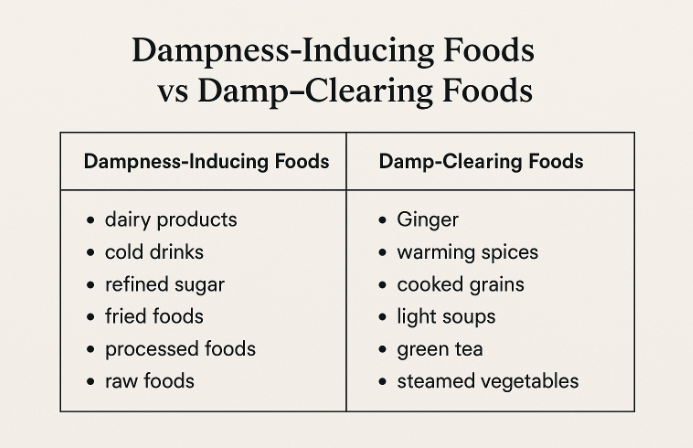
Foods that increase vs decrease dampness according to Traditional Chinese Medicine
What Causes Dampness to Accumulate?
How Does Diet Play a Role in Creating Dampness?
Certain foods are particularly likely to generate dampness in the body, especially when consumed regularly or in large quantities:
Dampness-promoting foods:
Cold and raw foods: Ice cream, cold drinks, raw salads, and smoothies
Dairy products: Milk, cheese, yoghurt, and cream-based foods
Refined sugars and sweets: Candy, pastries, and processed desserts
Greasy and fried foods: Fast food, deep-fried items, and heavy oils
Processed foods: Foods with artificial additives and preservatives
Damp-clearing foods:
Warming spices: Ginger, cinnamon, cardamom, and turmeric
Cooked grains: Rice, quinoa, Job’s tears, and mung beans, prepared warm (these are particularly great for draining dampness)
Light soups and broths: Easily digestible, warming meals
Steamed vegetables: Lightly cooked rather than raw
Herbal teas: Ginger tea, green tea, and warming herb blends
Can Emotional States Create Internal Dampness?
In TCM, physical health and emotions go hand in hand. Emotionally sensitive is the system of the Spleen, especially:
Chronic worry and overthinking: Directly weakens the Spleen's ability to transform fluids
Excessive mental work: Overstudy or mental stress with insufficient relaxation
Stagnation of emotions: Suppressed feelings that form inner "knots”
Worry about the future: Chronic mental preparation and planning.
These cycles of mood can manifest in what TCM calls "Spleen Qi deficiency," where your body is no longer capable of processing both food and feelings and leading to damp accumulation.
Does Living in NYC's Climate Contribute to Dampness?
New York's variable weather—from warm, humid summers to soggy, cold weather during the wintertime—may indeed cause dampness, particularly in those constitutionally sensitive. And yet dampness from the outside (secondary to weather) is rarely of concern when internal dampness is not yet caused by dietary and/or lifestyle or constitutional reasons.
People at greatest risk of environmental dampness are those with:
Existing gastrointestinal weakness
History of chronic fatigue or autoimmune diseases
Sedentary lifestyle and blocked circulation
A diet rich in moisture-rich foods
How Does TCM Diagnose Dampness?
Traditional Diagnostic Methods
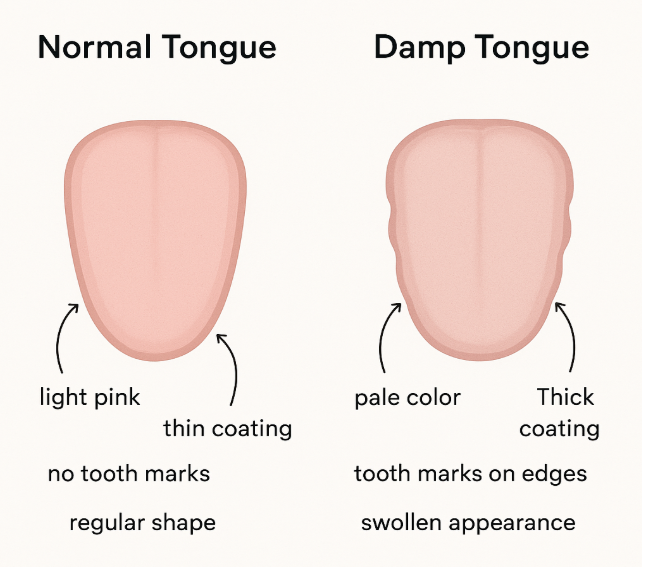
Tongue diagnosis signs of dampness in Traditional Chinese Medicine
TCM practitioners use several time-tested methods to identify dampness:
Tongue examination: The tongue provides immediate insight into your internal condition. A "damp tongue" typically shows:
Thick, sticky coating (often white or yellow)
Pale or swollen tongue, body with teeth marks on the edges
Wet, slippery surface that may seem unusually moist
Pulse diagnosis: The pulse in dampness often feels "soggy" or "slippery"—soft, flowing, and lacking the crisp quality of healthy circulation.
Detailed symptom analysis: We assess the timing, quality, and triggers of your symptoms to understand your unique dampness pattern.
Different Types of Dampness Syndromes
Damp-Cold: Characterized by slow metabolism, cold hands and feet and slow digestion. Commonly found individuals who consume excess cold food or individuals stay in cold, damp places.
Damp-Heat: Merges dampness with interior heat and produces symptoms of tacky sweating, acne-like skin eruptions, malodorous stools, and irritability. Prevalent in individuals who consume spicy or greasy foods or live high-stress lives.
Phlegm-Dampness: When dampness congeals into thicker "phlegm," clouding the mind and producing more serious digestive and respiratory symptoms.
Want a personalized assessment of your energy and digestive patterns? Book a private TCM consultation with our sliding-scale pricing.
How Acupuncture and Herbal Treatment Relieve Dampness
Acupuncture's Approach to Transforming Dampness
Dampness is treated with acupuncture by balancing Triple Burner—the TCM system that processes metabolism of body fluids within your body. Key treatment principles are:
Strengthening the spleen: Points like ST36 (Zusanli) and SP3 (Taibai) fortify your digestive system's power of transforming damp
Circulation stimulation: SP9 (Yinlingquan) and SP6 (Sanyinjiao) aid the stuck movement of fluid within your circulatory system
Lifting fog of the mind: Locations on the head like DU20 (Baihui) and Yintang help "lift the fog" of mental clear-thinking
Emotional regulation: Heart and Liver points help in regulating the emotional part that contributes to dampness
Herbal Treatment of Dampness Transformation
Classical TCM dampness formulas are:
Ping Wei San ("Calm the Stomach Powder"): For digestive system dampness with bloating and loose stools
Er Chen Tang ("Two-Aged Decoction"): For dampness-phlegm of the chest and impaired mental acuity
Wu Ling San ("Five-Ingredient Powder with Poria"): For edema-type dampness and water retention
These formulas work by strengthening your Spleen energy while simultaneously expelling excess dampness through increased elimination and circulation.
Treatment Timeline and Expectations
When improvement is first noticeable after regular treatment: within 2-3 weeks:
Weeks 1-2: Improved energy and reduced morning grogginess
Week 3-4: Clear thinking and better ability to digest
Month 2-3:Lasting energy lift and mood balance
Ongoing: Prevention of dampness recurrence with maintenance treatments
Daily Practices to Support Dampness Clearing
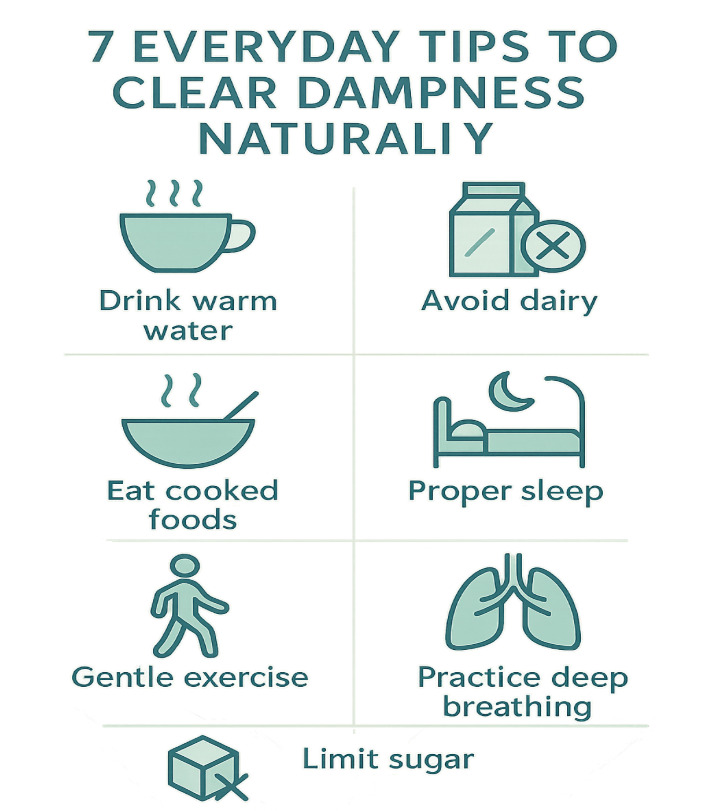
Seven daily practices to help clear dampness from the body naturally
Lifestyle Changes That Transform Dampness
Morning ritual: Wake up with warm water and ginger tea to stir up the digestive system and blood movement
Meal timing: Eat your largest meals at your strongest hour of digesting (morning and midday) when your Spleen energy is at its peak
Gentle movement: Regular moderate exercise like walking, tai chi, or qigong facilitates the movement of qi and arrests stagnation of fluid
Appropriate rest: Good sleep enables your body to rectify and expel gathered dampness within its inherent cycles of restoration
Home Remedies and Supporting Practices
Warm-up foods: Include ginger, cinnamon and other warm spices in your daily cooking
Proper water consumption: Drink warm or room-temperature beverages rather than cold beverages
Breathing exercises: Deep belly breathing can activate your digestive system and enhance healthy circulation
Dry brushing: Gentle brushing of skin before baths enhances circulation and lymphatic drainage
📚For further studies, you can read this :
• Analysis of Dampness-Removing Traditional Chinese Medicine
• Psychometric Validation of Dampness Syndrome Scale:
When Should You Seek Expert TCM Advice?
Signs That Damp Needs Professional Attention
While mild dampness often responds well to dietary and lifestyle changes, you should consider professional treatment if you experience:
Recurring symptoms beyond a period of 4-6 weeks despite lifestyle changes
Interlocking of several symptoms impacting digestion, energy, and mental acumen at once
Recurring symptoms of illness or skin problems that may mirror dampness patterns underlying
Significant impact on daily activities, work performance, or relationships
What You Can Expect During Open Care Community Treatment
Our treatment of dampness is individual and holistic:
Detailed consultation: We take time to learn about your individual pattern of symptoms, lifestyle considerations, and medical history
Personalized treatment program: Blending acupuncture, herbs, and lifestyle recommendations specific to your dampness type
Ongoing care: Follow-up visits to check progress and alter treatment if necessary when your condition improves
Learning and empowerment: We educate you on listening to your body and sustaining enhancements over the long term
👉Ready to feel lighter and more balanced? Our Downtown Brooklyn clinic is accepting new patients. No proof of income required—just pay what you can.
The Philosophy of Balance and Long-term Wellness
Holistic Health vs. Treatment of Symptoms
Dampness is seen in Traditional Chinese Medicine as your body providing early warning of underlying imbalances within your lifestyle, eating patterns, and emotional style. Treatment under TCM is aimed at rather than masking the symptoms of:
Restore the body's inherent ability to handle liquids and emotions correctly
Get to the real issues instead of just fixing superficial symptoms.
Strengthen constitutional robustness so that it is more difficult for issues to recur.
Equip you with skills and resources toward long-term prevention and self-care
Seasonal Awareness and Dampness Prevention
Knowing about dampness allows you to work with, yet not against, your body's nature. This involves:
Seasonal eating: Choosing foods that support your body during different weather patterns
Activity modifications: Adjusting exercise and rest habits with seasonal variations of energy supply
Environmental consciousness: Reading about how your environment affects your body's inner harmony
Preventive care: Maintenance treatment regularly at the change of season, when moisture is prone to collect
Your Journey Toward Balance
You need not suffer from dampness. At Open Care Community, we have assisted many Brooklynites convert chronic fatigue, brain fog, and gastrointestinal problems into lasting energy, clear-minded functioning, and physical vitality.
Understanding dampness is often where the process of reclaiming your natural lightness and vitality starts. Whether it is fatigue that lingers and won't abate, inexplicable digestive issues, or being stuck and sensing that you are not entirely yourself, our highly trained practitioners await with a listening ear, sensitive and understanding heart, and compassion bolstered by ancient wisdom and modern empathy.
👉Live with your energy and body in sync. Our practitioners don't simply treat—but listen. Learn about our team and see how TCM can make you feel like yourself.
Your next step book an appointment today
📍Address: 44 Court Street, Suite 1000 (10th floor), Brooklyn, NY 11201
📧Email: info@opencarecommunity.com
📞Phone: (917) 426-1138
Booking: Book Online Here
FAQs
1. What does dampness in the body mean in Chinese medicine?
In TCM, dampness refers to a pathological accumulation of fluids that slows circulation of Qi and blood. It is often linked to weak digestion and environmental factors like humidity.
2. How do you know if you have dampness in your body?
Common signs include bloating, heaviness in the limbs, fatigue, brain fog, loose stools, skin issues, and a thick tongue coating.
3. How do you get rid of phlegm dampness in TCM?
TCM addresses phlegm dampness by strengthening the spleen, improving digestion, using herbal formulas, acupuncture, and adjusting diet and lifestyle habits.
4. What should you eat for dampness in TCM?
Foods that help reduce dampness include warm, cooked meals, ginger, barley, adzuki beans, leafy greens, and lightly spiced foods. Cold, greasy, and sugary foods are typically limited.
5. What causes dampness to build up in the body?
Poor digestion, excessive sugar or dairy intake, lack of movement, chronic stress, and living in humid environments can all contribute.
6. Is dampness linked to weight gain in TCM?
Yes. Dampness may contribute to water retention, sluggish metabolism, and difficulty losing weight in Chinese medicine.
7. Can acupuncture help with dampness?
Yes. Acupuncture can support fluid metabolism, digestive function, and Qi movement, helping the body clear dampness more efficiently.
