Five Elements in Traditional Chinese Medicine and How They Influence Health
Healthcare should be accessible, grounded, and people-centered. In the heart of Downtown Brooklyn, Open Care Community offers patient-centred care rooted in Traditional Chinese Medicine (TCM), making holistic treatment both approachable and affordable.
One of the foundational frameworks used in TCM is Five Element Theory—a system that helps practitioners understand how physical symptoms, emotional patterns, and lifestyle factors interact over time. Far from being symbolic or outdated, this model remains clinically relevant today.
Whether navigating chronic stress, supporting fertility care, recovering from physical strain, or adapting to the pace of city life in New York, understanding the Five Elements can offer insight into how the body seeks balance—and how it signals when something is off.
Schedule your first acupuncture appointment!
The Roots of Connection
Traditional Chinese Medicine (TCM) Traditional Chinese Medicine (TCM), developed over more than 2,500 years, approaches health through relationships between body systems rather than isolated symptoms. Rather than focusing narrowly, it views health through patterns that stretch beyond single parts. Balance matters most here, where a change in one area of the body affects distant areas. Movement and harmony shape its core ideas, guiding how practitioners interpret illness and wellness alike.
A mechanic fixes what breaks; that is how Western medicine often works. Yet Traditional Chinese Medicine takes another path—more like gardening than repairing. Soil health stands in for nutrition, weather mirrors the environment, while irrigation echoes the circulation of fluids and vital force (Qi). The location of discomfort draws less focus compared to the underlying imbalances that began long before symptoms appeared. Harmony guides treatment, not just the removal of signs. What matters lies beneath the surface.
Understanding Qi, Yin, and Yang
In TCM, Qi refers to the body’s functional energy—responsible for movement, circulation, warmth, and physiological activity. When Qi flows smoothly, the body tends to feel resilient and clear. When it becomes deficient or stagnant, discomfort, fatigue, or tension may arise.
Health is further understood through the dynamic relationship between Yin and Yang. These are not fixed states but complementary forces that constantly adjust to maintain balance.
Yin represents cooling, nourishment, rest, and substance. It supports recovery, sleep, and internal stability.
Yang represents warmth, movement, and activation. It fuels metabolism, circulation, and outward expression.
When Yin and Yang are in harmony, the body adapts smoothly to stress and change. Imbalances—such as excess heat, chronic fatigue, or restlessness—often reflect subtle shifts between these forces.
The Five Elements Explained
Five Element Theory describes health through five interconnected phases found in nature: Wood, Fire, Earth, Metal, and Water. Each element corresponds to specific organs, emotions, seasons, and physiological tendencies. Together, they form a dynamic system used to assess patterns of imbalance and guide treatment decisions.
What makes Five Element Theory so key? It serves as a practical method for identifying health issues. If an element is out of balance, that observation shapes the next steps. Practitioners at Open Care Community rely on it to choose suitable acupuncture points. From that assessment, choices about plant-based remedies follow.
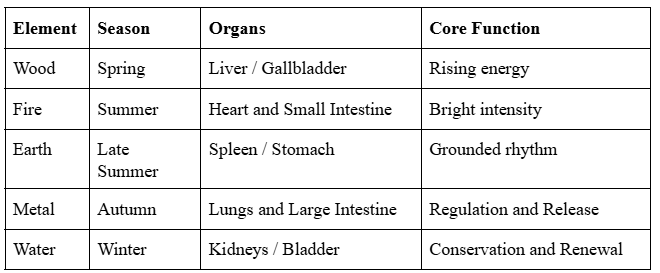
The Five Elements interact through two primary cycles:
The Generating Cycle, where each element supports the next (Wood feeds Fire, Fire creates Earth, Earth bears Metal, Metal enriches Water, Water nourishes Wood).
The Controlling Cycle, where elements keep each other in check to prevent excess. This balance allows the system to self-regulate rather than tip toward dysfunction.
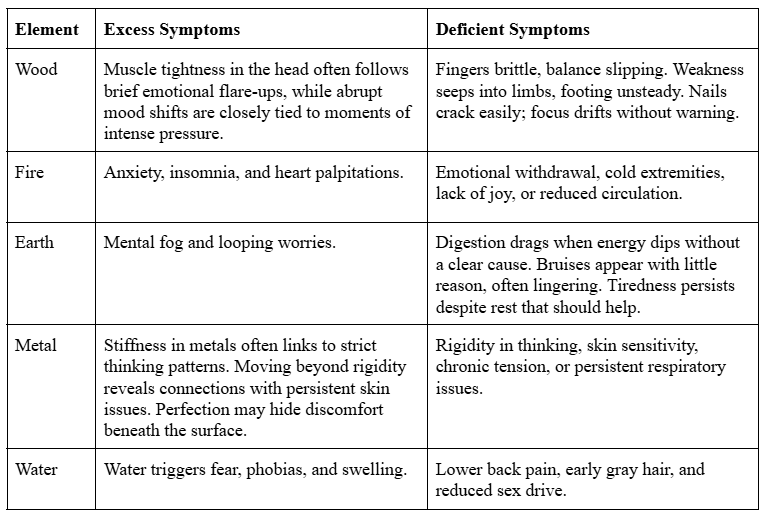
Symptoms When Elements Are Out of Balance
Identifying Your Core Element
While everyone expresses aspects of all five elements, one or two often dominate. These tendencies can influence personality, stress response, and common health patterns.
Wood Types: Energetic leaders; strong in sports and outdoor activities.
Fire Types: Fueled by energy, fire types often shine brightly at first; yet their intensity can fade just as quickly. Stillness creeps in after the initial spark dims.
Earth Types: Steady, kind, supportive, and grounded.
Metal Types: Analytical, precise, and structured. These individuals value clarity and boundaries but may struggle with rigidity or difficulty letting go.
Water Types: Over time, water reveals depth through quiet reflection. Resilience emerges where stillness meets change. Insight forms slowly, shaped by what flows beneath.
Healing Pathways at Open Care Community
At Open Care Community, Five Element Theory helps guide personalised treatment plans. Practitioners assess how elemental patterns show up physically and emotionally, then tailor care accordingly.
Wood (Stuck Energy): Symptoms like TMJ or temporal head aches are treated by calming Liver Qi with acupuncture and formulas like Xiao Yao San.
Fire (Heat/Anxiety): Late night agitation or a pounding pulse finds balance through pathways tied to the heart, guided by the pericardium’s flow. Quiet returns as these rhythms settle into their natural course.
Earth (Digestion/Fog): Heat treatments, known as moxibustion, helps strengthen the spleen. This process reduces internal dampness, often linked to foggy thinking. Clarity may improve when the moisture-related imbalance fades. Focusing on the body's processing systems, earth links the physical breakdown of food with how thinking unfolds.
Metal (Breath & Skin): Techniques such as acupuncture and Gua Sha may be used to support lung function, skin health, and circulation at the body’s surface. These approaches aim to encourage release and restore rhythm rather than force change.
Water (Kidney Reserves): Beneath the ribs, discomfort often stirs when energy wanes, similar to moisture slipping from parched soil. At first faint, it becomes louder with each passing day. This pattern points to strained reserves deep within the body. Focused needle therapy works along specific pathways to support renewal. Herbal mixtures complement this process by reinforcing internal strength.
At-Home Rituals and Nutrition
A fresh rhythm at home supports healing just as much as scheduled appointments.
Mindful Practices
Simple daily check-ins can support elemental balance. Noticing energy levels, emotional tone, and physical tension—without judgement—helps identify early signs of imbalance. Short pauses, gentle breathing, and grounding practices can reinforce the effects of clinical care.
Nutritional Support
Wood: A new beginning might just stem from leafy vegetables - think kale or parsley - with a hint of lemon juice added in. Freshness often hides in simple blends, where green tones meet sharp citrus notes. Fire: When flames rise within, bitter greens like arugula might bring relief. Dandelion leaves, though tough on the tongue, sometimes calm what burns beneath. Coolness grows in these bitter bites.
Earth: Fresh from the soil, carrots bring a steady boost to your day. Squash follows a similar path, offering balance through its rich tones. Sweet potatoes stand out. Note that all these foods come in tones of yellow and orange, matching the color associated with the Earth element.
Metal: Breathe easier by cooking with garlic, turnips and radishes, which support lung function. Ginger supports the digestive system, the “mother” of metal, and adds strength when included regularly. Onions contribute protection through natural compounds found within them.
Water: Balancing fluids often improves when subtle saltiness enters the diet - miso fits well here, supporting the kidneys gently. Seaweed offers a similar effect, quietly enhancing internal harmony through taste.
Seasonal Awareness
Spring (Wood): Gentle stretches and slow bends.
Summer (Fire): Stay hydrated; connect with others.
Autumn (Metal): Slower breathing practices and attention to lung health become especially supportive as the weather cools.
Winter (Water): Rest more when winter arrives; aim for earlier sleep each night while protecting your lower body from the cold. Begin by warming the space around your waist before temperatures drop too low. Stay covered, especially along the back of the neck.
Finding Balance Through the Five Elements
Understanding how the Five Elements interact offers a practical lens for recognising patterns in health, emotion, and energy. With consistent care and awareness, small adjustments can lead to meaningful, long-term change.
If you’re based in Brooklyn or the greater New York City area, Open Care Community offers affordable, patient-centred acupuncture and integrative care rooted in these principles.
Balance Your Elements With Acupuncture. Schedule Now.
FAQs
1. What are the Five Elements in Traditional Chinese Medicine?
The Five Elements in TCM are Wood, Fire, Earth, Metal, and Water, representing different natural forces that influence bodily balance and health.
2. How do the Five Elements relate to health?
In TCM theory, each element is associated with specific organs, emotions, and body functions that work together to maintain balance.
3. Which organs are linked to the Five Elements?
For example, Wood is associated with the liver, Fire with the heart, Earth with the spleen, Metal with the lungs, and Water with the kidneys.
4. Why is balance between the Five Elements important?
Balance between the elements is believed to support proper energy flow and overall physical and emotional well-being.
5. How do TCM practitioners use the Five Elements concept?
Practitioners may use it to guide diagnosis and treatment approaches such as acupuncture, herbal medicine, and lifestyle adjustments.
6. Can the Five Elements influence emotions?
Yes, each element is linked with certain emotional states according to TCM philosophy.
