
What Are the Best Natural Herbs to Support Men’s Prostate Health?
Many men don’t give much thought to their prostate until something feels off, or the yearly physical rolls around. It's natural for the prostate to shift as we get older; however, sorting through the volume of information online can feel overwhelming. We want to cut through the noise, offering straightforward details so you can actively manage your well-being rather than feeling dismissed.
Good news, there are supportive options to explore. For centuries, traditional Chinese medicine and plant-based remedies have supported well-being, offering long-standing approaches used to support overall well-being. It isn’t meant to replace regular medical treatment; instead, it suggests tailoring health solutions by blending age-old understanding with current insights.
We at Open Care Community focus on the complete person, beyond simply what ails you. Here, we’ll look at helpful herbs for prostate well-being, drawing from both traditional Western knowledge and Eastern practices.
Want a wellness plan tailored just for you, or perhaps some natural remedies to explore? We offer Herbal Consultations right here at Open Care Community in Brooklyn. Feel free to schedule one here.
Why Does Prostate Health Matter for Men at Every Age?
Getting to know your prostate, how it works, how it shifts as you get older, is key if you want to feel good. Though small, this gland does a lot; taking care of it really matters for living well.
What is the prostate?
The prostate, a small gland found in people with prostates, mainly helps make semen. It also has a hand in influencing urinary function. Basically, it contributes to reproduction yet influences how fluids leave the body.
Where is the prostate located, and what does it do?
Downstream from your bladder, encircling the tube that carries urine, sits the prostate, about the size of a walnut. It makes fluid vital for healthy sperm, helping them move and stay nourished. Consequently, it plays a role in both urination and reproduction.
What are common changes to the prostate as men age?
As men get older, the prostate often gets bigger; it’s a pretty typical shift. Sometimes it also becomes less efficient at emptying completely, which may contribute to urinary changes. Occasionally, inflammation develops, while in other instances, cellular changes simply happen over time.
With age, hormone changes (in testosterone and DHT) are associated with prostate enlargement. It’s a normal part of getting older, though it sometimes creates problems. Doctors refer to this swelling as benign prostatic hyperplasia, or BPH.
What are the most common prostate conditions?
Trouble with the prostate often shows up as difficulty urinating, needing to go frequently, especially at night, or a weak urine stream. Sometimes infections flare up, also causing pain down there. Enlargement is typical as men age, though less frequent issues involve inflammation or, more seriously, cancer.
Prostate issues crop up for many men, typically beyond middle age. Three stand out as particularly frequent:
Benign Prostatic Hyperplasia (BPH): An enlarged prostate, not cancer, can pinch the tube through which urine flows, leading to trouble going to the bathroom.
Prostatitis: The prostate, a gland found in men, can become inflamed or swollen. This might happen because of an infection, or for other reasons we don't always know. When it flares up, individuals could experience discomfort, trouble going to the bathroom, and feeling sick like they have the flu.
Prostate Cancer: Men can get prostate cancer when cells inside the prostate grow wildly. Finding it at an early stage with checkups supports earlier evaluation.
Paying attention to changes in your body matters. Notice anything off? Perhaps fatigue, mood swings, or a general feeling that things aren’t quite right. Maybe a change in how often you pee, or difficulty getting an erection. These shifts shouldn’t be ignored; instead, get them checked out.
What are the early warning signs of prostate issues?
Your body usually tells you something’s up before a serious problem develops, particularly with your prostate. Initial warnings frequently show as changes when you pee. Pay attention if you notice:
Needing to pee more often, or feeling like you really gotta go, particularly when you’re trying to sleep.
Trouble beginning to pee, or when the flow starts and stops.
A few drops leak out even when you think you’re finished peeing.
It’s like there’s still some pee left inside, even after you just went. A lingering fullness.
Burning or discomfort during urination.
If you spot any of these things, don’t panic; however, do make an appointment with your doctor.
How Can Herbal Medicine Assist the Prostate Naturally?
Plants can help your body heal itself; it’s quite natural. Within Traditional Chinese Medicine, figuring out why things are off often means looking at how different parts of you connect.
How does TCM view prostate health?
Traditional Chinese Medicine doesn’t look at the prostate alone. Instead, it links its well-being to the kidneys, which handle peeing, having kids, and deep vitality. Folks consider these kidneys the source of life itself; they hold essential substances while managing fluids below. When kidney energy is low or off-balance, problems such as an enlarged prostate or inflammation can develop. Moreover, healthy liver and spleen function, which keeps energy and circulation steady, is important too.
Herbs, where do they stand alongside typical medical checkups or care?
It’s a question of how traditional plant remedies interact with what doctors usually do. Consequently, understanding their place requires looking at both worlds.
Don’t skip doctor visits, thinking herbs will fix everything. Instead, consider them helpers alongside what your healthcare provider recommends. Your doctor checks your prostate’s size and what it feels like; meanwhile, a skilled herbalist recommends a formula meant to tackle the root causes of how you feel. Combining these viewpoints eases discomfort, lowers swelling, lifts your spirits, and supports complete health.
What does the research say?
Folks have wondered if certain plants might ease discomfort from prostate issues, specifically, an enlarged prostate or inflammation. Research explores whether they offer some help with symptoms.
Some traditional uses of herbs are being studied for prostate-related symptoms:
Some herbs are studied for their anti-inflammatory properties, easing irritation thanks to their inherent ability to fight swelling.
Some herbs have been researched for their influence on hormone pathways that are converted to DHT, which is one of the contributors to an enlarged prostate.
Some factors increase urine flow and may support urinary comfort, so you can go more comfortably and fully empty your bladder.
Herbs are sometimes described as adaptogenic, which helps your body manage stress and reduce irritation.
What Are the Most Beneficial Herbs for Prostate Health?
Men’s well-being gets a boost from plant power, whether it comes through Western herbal traditions or those of Traditional Chinese Medicine. Some standouts include:
How does Saw Palmetto assist with BPH and urinary function?
Saw palmetto, a well-known herb, often eases issues with an enlarged prostate. Studies, even those conducted by organizations like the NIH, suggest it may help manage urinary symptoms associated with BPH, possibly influencing DHT pathways.
How does African plum bark ease swelling, specifically what within it works to do so?
For centuries, people have used Pygeum, which traditionally used for urinary symptoms linked to prostate enlargement. A study from the Cochrane Library shows that this traditional remedy may also help support urinary comfort from an enlarged prostate, like needing to go often.
Can Nettle Root reduce prostate size and symptoms?
Nettle root, a helpful plant from Western herbalism, eases prostate issues via both calming inflammation and interfering with hormones fueling growth. Research highlighted by the National Library of Medicine suggests it has been studied for its role in symptom support.
How does Reishi (Ling Zhi) support prostate health?
Reishi, called Ling Zhi in traditional Chinese medicine, is thought to both bolster immunity and help people cope with stress. Studies suggest it has been researched for immune-modulating properties, so it is a commonly used ingredient in prostate health. Reishi mushrooms may bolster prostate health by giving the immune system a lift within the prostate, potentially helping it support immune balance.
How might Chinese herbs like Huang Qi (Astragalus) and Shu Di Huang (Rehmannia) support the Kidney system?
Western herbalism frequently focuses on one issue at a time; however, traditional Chinese medicine employs combinations crafted to support a person’s overall well-being.
Astragalus root (Huang Qi) really boosts your vitality. It supports both spleen function and kidney health, giving you more stamina while also aiding fluid balance; this can be particularly helpful if you experience general vitality and fluid regulation.
Prepared rehmannia root (Shu Di Huang), a vital ingredient, builds kidney energy while traditionally used to nourish Kidney yin. It tackles weaknesses that come with growing older, fostering lasting health.
Let’s look at how things stack up against each other
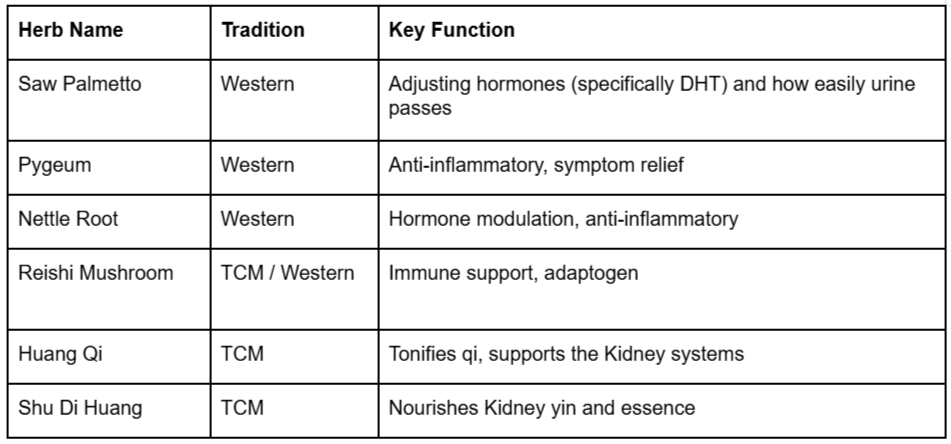
Not sure what herbs are right for you? Our team at Open Care Community offers personal check-ins with qualified herbal practitioners; they’ll guide you toward options suited to your unique needs.
How Can Lifestyle and Diet Support Herbal Recommendations?
To really benefit from herbs, use them alongside sensible eating habits and consider how you live your life.
What’s the best diet for prostate health?
To keep your prostate healthy, evaluate your food habits. A diet rich in veggies, think tomatoes, broccoli, alongside fish, nuts, and low on red meat, is often recommended for general health. Some people choose to moderate dairy, instead opting for alternatives. Ultimately, consulting a doctor is key.
To ease inflammation, focus on a food plan brimming with produce and good fats. Think tomatoes, watermelon, they’re packed with lycopene. Pumpkin seeds or chickpeas offer zinc, while salmon and walnuts deliver those helpful omega-3s. Simultaneously, try to cut back on things that might worsen inflammation: steer clear of red meat, processed dairy, sugary treats, and limit caffeine.
How does exercise affect the prostate?
Exercise impacts hormones and inflammation. It’s a two-way street; moving your body shifts things happening inside, dialing down swelling and regulating chemical messengers.
Keeping active with consistent, reasonable workouts helps manage weight, steady hormone levels, and reduce overall body swelling, factors that matter to a man’s prostate.
Could feeling stressed affect a man’s prostate?
It’s a question worth asking.
Traditional Chinese Medicine suggests that ongoing tension may disrupt energy flow within the liver. If that energy, alongside blood, doesn't move freely through the lower regions, irritation, discomfort, and changes in how you go to the bathroom could arise. Simple things like quiet reflection, focused breaths, or a quick stroll sometimes help quite a bit.
What Do You Need to Know Before You Use Herbal Medicine?
Knowing things gives you an edge. Before you start using herbs, consider these key ideas:
Can I take herbs with my prescription medication?
Using herbs alongside regular medicine needs careful thought. It’s vital to talk with both a knowledgeable herbal practitioner and your physician because some herbs, especially when combined with things for blood clotting or blood pressure, can cause problems. Please be sure to disclose any medications you’re taking in your intake so your Clinical Herbalist can check for any drug-herb interactions or contraindications.
How long does it take for herbal medicine to work?
Don't expect results overnight with natural remedies. Healing with herbs unfolds gradually; it isn't an instant solution. Getting back on track with your health unfolds gradually. Responses vary and may take time with regular effort.
Do I still need to get a prostate exam?
Guys can still get checked even if they’re taking herbal remedies. These treatments work alongside regular medicine, so don’t skip important tests, like prostate exams, your physician suggests.
Should I self-prescribe herbs or see a professional?
Thinking about remedies, herbs you grab yourself, or guidance from someone who truly knows plants? A skilled herbalist offers way more than just naming a plant; they consider you alongside it. Considering what makes you, specifically, tick, they craft a custom blend meant to restore harmony within. It’s a more guided approach compared to guessing at solutions amongst countless bottles.
When to See a Provider for Prostate Health?
Should discomfort linger, whether it’s trouble with urination, aches, or those previous problems, a checkup from a regular doctor is wise to exclude anything grave. With a firm understanding of what’s happening, someone skilled in Traditional Chinese Medicine could then become a helpful partner in feeling better.
We get to know you at Open Care Community; a clinician assesses your overall well-being through conversation, observing your tongue, and feeling your pulse. Consequently, we understand how your individual energy flows. By blending this understanding with standard medical tests, we aim for lasting health.
Want to feel better? Schedule an Herbal Consult or acupuncture session now at our spot in Brooklyn.
What Prostate Health Services Does Open Care Community in Brooklyn Provide?
Our approach centers on well-being: complete health for all. Consequently, we provide a range of options geared toward helping you.
Can acupuncture help with urinary symptoms?
Acupuncture is sometimes used to support comfort and relaxation related to urinary concerns.
Need to go often? Feeling that urgent sensation? Acupuncture might help. It seems to get blood moving down there, ease swelling, quiet things down internally, and regulate how your bladder works. People tell us it really makes a difference with those frustrating bathroom trips.
What is an herbal consultation like at Open Care?
At Open Care, seeing an herbalist means a conversation about what’s going on with you, your health, lifestyle, and everything that feels relevant. Following this discussion, the herbalist crafts a personalized blend of plant medicines designed to support your well-being. It’s a collaborative process; expect follow-ups to see how things are progressing and adjustments as needed.
You’ll chat one-on-one with an herbalist who really listens, digging into what’s happened with your health so far, and where you want to be. Following that, they craft a unique blend of herbs just for you or recommend an existing, time-tested herbal formula.
Are treatments affordable?
Healthcare should be accessible to everyone, so we run a community acupuncture clinic where costs range from $50 to $90. Moreover, we strive to make herbs, like everything else we offer, reasonably priced.
You’ll find us right in Downtown Brooklyn, eager to help. Stop by 44 Court Street, Suite 1000, Brooklyn, NY 11201, or simply phone a specialist at (917) 426-1138.
FAQs
1. Why is prostate health important for men?
The prostate plays a role in reproductive and urinary health, and maintaining its function is important for overall well-being.
2. What natural herbs are commonly used for prostate health?
Herbs such as saw palmetto, pygeum, stinging nettle root, and pumpkin seed extract are often associated with prostate support.
3. How do herbal remedies support prostate health?
Some herbs may help support urinary flow, reduce inflammation, and promote overall prostate wellness.
4. Are natural herbs safe for prostate health?
Many herbs are generally considered safe when used as directed, but it’s important to consult a healthcare professional before use.
5. How long does it take for herbal supplements to show results?
Results may vary, and consistent use over several weeks or months is often recommended.
6. Can herbs prevent prostate problems?
Herbs may support prostate health, but they should not replace regular medical checkups and preventive care.
