Natural Remedies for Urinary Tract Support
What Are the Most Effective Natural Remedies for Urinary Tract Support?
Urinary tract infections (UTIs) are common and can be disruptive — especially for women, older adults, athletes, and people navigating hormonal shifts. At Open Care Community, patients often ask about natural ways to support urinary health alongside appropriate medical care. Below, we explore evidence-informed approaches, including lifestyle strategies, nutrition, and perspectives from Chinese medicine.
Struggling with ongoing bladder issues? These problems need solutions that fit your unique situation. Chat one-on-one with our experienced herbalists; they'll help you build a natural path forward. Start today by scheduling your session → Tap Here.
What Causes Urinary Tract Issues in the First Place?
A urinary tract infection (UTI) occurs when bacteria — most commonly Escherichia coli (E. coli) — enter the urinary tract and multiply, often within the bladder.
How Does the Urinary Tract Work?
The urinary system includes the kidneys, ureters, bladder, and urethra. Its role is to filter waste and excess fluid from the blood, forming urine that is stored in the bladder until elimination. When bacteria enter any part of this system, inflammation and infection can develop.
What Are the Common Symptoms of UTIs?
Some people feel a little discomfort, while others have sharp pain. Typical warnings might be:
A constant, powerful need to urinate.
A burning sensation (dysuria) during urination.
Frequent trips to urinate, but just a little each time.
Cloudy, dark, or strong-smelling urine
Pelvic discomfort, particularly common in women.
What Are the Root Causes According to Western and Chinese Medicine?
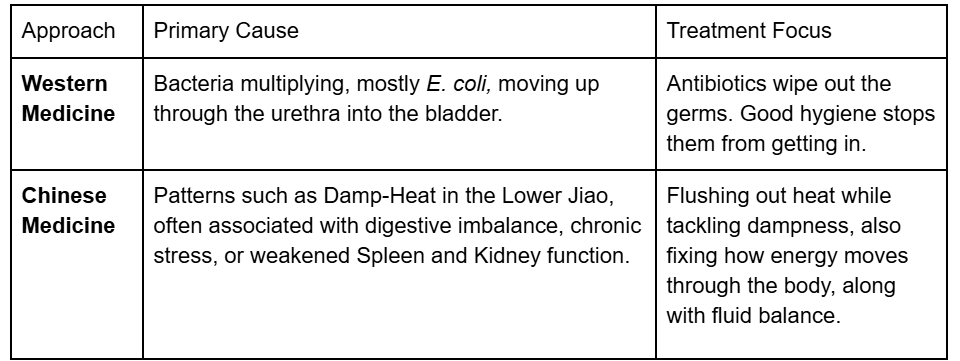
In Chinese healing, the kidneys team up with the bladder and lower belly area to clear out dampness and heat. If that system gets off track (which can show up as swelling or discomfort), problems like UTIs might pop up.
How Can Lifestyle Changes Help Prevent Urinary Tract Infections?
Tiny changes done regularly to how you live day-to-day might sharply lower the chances of getting a UTI.
Are There Hydration and Hygiene Habits That Help?
Staying hydrated matters - water clears out your system, so germs can't stick around in your bladder. Sipping water often keeps things moving, which means fewer chances for trouble to take hold.
Wipe from front to back to help prevent bacteria from entering the urinary tract.
Avoid irritants by skipping rough soaps, bubbly bath products, or feminine sprays or scented products; they might mess up your body’s natural vaginal balance.
Can Diet Play a Role in Urinary Tract Health?
Yes! What you eat affects inflammation levels inside you, also shaping gut bacteria that tie into how well your bladder works.

What Natural Diuretics Can Be Safely Used?
Natural diuretics boost pee flow a bit - this helps support urinary flow. Try easy picks like:
Celery helps flush fluids gently - slip it into meals without hassle.
Green tea might help flush fluids - though it’s got caffeine, so watch out if your bladder acts up easily. It could make you go more often, especially when sensitivity flares. Use cautiously if you are sensitive to caffeine.
Dandelion leaves are commonly found in natural remedies that help ease water retention.
Which Herbal Remedies and Natural Supplements Support Urinary Tract Health?
Plant-based remedies can help with bladder problems - soft yet effective, sometimes even stopping them before they start.
What Is the Evidence for Cranberry (Vaccinium Macrocarpon)?
Cranberries, whether as pure juice or in pills, contain special compounds known as A-type PACs. Instead of wiping out germs, these substances prevent E. coli from attaching to the bladder lining.
A look at studies from Cochrane and JAMA shows cranberry products are not considered a treatment for active infections, yet they may help reduce recurrence in some individuals in people prone to them, since they make it tougher for germs to stick around. (Source:Cochrane Review)
How Does D-Mannose Compare to Antibiotics?
D-Mannose is a kind of sugar that the body can’t process easily. So, it passes out through pee. E. coli bacteria really stick to D-Mannose, choosing it over clinging to the bladder lining.
In certain trials, D-Mannose has shown comparable preventive outcomes to antibiotics for repeat UTIs, and it leaves good gut bacteria untouched.
Can Uva Ursi, Marshmallow Root, or Goldenseal Be Effective?
Herbalists sometimes recommend these Western plants when dealing with bladder issues - but it’s wise to check with a licensed herbalist before trying them since certain ones can be strong. Usage without guidance might lead to unexpected effects, so professional advice helps stay safe. Each herb acts differently, making personalized input valuable.
Uva Ursi works by tightening tissues while fighting germs. It is most effective when applied briefly during sudden flare-ups. Because of its intensity, reserve it for brief spells rather than ongoing use.
Marshmallow root calms irritation gently. This plant forms a slippery layer, which might cover raw spots in the urinary area. It soothes by shielding sensitive tissue naturally.
Goldenseal has berberine, and research suggests it can demonstrate antimicrobial activity in controlled settings. Because it's powerful and harvesting it raises ecological issues, it should only be used under professional supervision.
What Herbs Are Used in Chinese Medicine for Bladder Support?
In Chinese healing, plant mixes usually aren't just one ingredient; they're tailored blends meant to tackle a person’s unique Damp-Heat signs.
Example Formula: Ba Zheng San (八正散): Translated as "Eight-Herb Powder for Rectification," this classic formula is used to traditionally used to clear Heat and drain Dampness from the Lower Jiao. It includes herbs like Qu Mai (Dianthi Herba) and Bian Xu (Polygoni Avicularis Herba).
Your body's energy is called Qi, so our Chinese herb mixes help support the smooth movement of Qi (energy) while clearing blockages.
Wondering if herbs mix well with your meds or suit your body? Try a custom chat about herbal healing atOpen Care Community tied to your culture and life. Pick what feels right to pay, thanks to our flexible pricing →Grab your spot now.
Can Acupuncture Support Urinary Tract Function and Immune Response?
Acupuncture works well in traditional Chinese healing to ease discomfort while lowering chances of bladder problems coming back - especially stubborn types like interstitial cystitis.
What Points Are Used for UTIs and Bladder Heat?
Acupuncturists pick certain spots to help the body fight swelling while getting rid of Damp-Heat. Often used locations are:
CV3 (Zhong Ji): This spot’s commonly used to help ease bladder issues - also tied to womb health from a traditional view.
SP9 (Yinlingquan): A key point for resolving Dampness anywhere in the body.
KI3 (Taixi): This spot boosts Kidney Yin, helping calm internal heat while reducing chances it comes back - so your system stays balanced without flare-ups showing up again.
How Does Acupuncture Help Restore Yin and Clear Damp-Heat?
Acupuncture nudges the nerves and blood flow into better harmony. When it comes to bladder problems, here’s what it might do:
Lower swelling: It may help regulate inflammatory signaling.
Control the bladder: Might impact nerve signals linked to its muscles, which could ease how often you need to go, plus make urges less intense.
Supports Yin: the body’s cooling and nourishing aspect.
Are There Peer-Reviewed Studies on Acupuncture for Chronic UTIs?
Emerging research suggests acupuncture might help ease symptoms of long-term issues such as Interstitial Cystitis - while also cutting down on repeat UTIs for some people, thanks to boosting immunity or calming tense muscles around the pelvis.
Experience the comfort and personalized treatment of acupuncture →Explore our affordable Community Acupuncture and Private Acupuncture services.
When Should You See a Medical Provider for a UTI?
Natural fixes or small daily tweaks work well to stop issues early on - but if bacteria's involved, you’ll need fast treatment so it doesn’t move up toward the kidneys.
What Are Signs a UTI Could Be Serious?
If the infection spreads beyond your bladder into your kidneys, things get way worse - call a doctor fast if you notice signs like these:
Fever and chills.
Pain in your back or one side - called flank pain.
Nausea and vomiting.
Blood showing up in your urine - that’s called hematuria.
Can Natural Remedies Be Used Alongside Antibiotics?
In many cases, yes. Lots of holistic health pros suggest trying stuff like D-Mannose or calming Marshmallow Root while you're on the antibiotics your doc gave you. That way, things may help support comfort during treatment, ease discomfort, and maybe even keep it from coming back. But always check with your provider first before adding anything into the mix.
When Is It Safe to Try Herbal Approaches First?
When you’ve got a little burn when peeing, need to go often, or your urine looks hazy, drinking more water might help - toss in a solid cranberry pill or D-Mannose for a day or two. Yet should things stay off, get worse, spike a fever, or you start feeling pain at your back? Get in touch with your doctor right away.
At Open Care Community we are always happy to discuss acupuncture and herbs, but we will always let you know when we think you should see your doctor.
What Daily Practices Can Help Keep Your Urinary Tract in Balance?
A strong bladder is one way of showing that your body is in balance. Using combined methods of acupuncture, herbs and lifestyle helps keep your kidney and urinary energy steady over time.
How Do Stress and Sleep Affect the Bladder?
Chronic stress is associated with increased inflammatory activity, weakening your body’s defenses, leaving you open to illness. Bad sleep piles on to theproblem. Getting enough rest plus handling daily pressures helps keep both immunity and bladder health in check.
What Movement or Bodywork Therapies Could Help?
Gentle tui na on the belly helps blood flow to the pelvis - this supports clearing blockages or excess moisture. Touch here may gently support circulation and relaxation for natural balance down below.
Gua Sha: Applied to the lower back, gua sha (a traditional scraping technique) can stimulate energy flow and relieve muscular tension related to urinary discomfort.
Can Mind-Body Practices Like Qigong Support Kidney Qi?
Qigong, pronounced "chee-gong," mixes slow motion with breath control plus mental attention. Movements aimed at the Kidney pathway aim to:
Build up Qi: This powers the force, keeping your body's liquids balanced.
Calm your mind - this tackles stress right away, which can fuel body flare-ups.
Which Patients Are Most at Risk, and How Can They Take Preventive Measures?
Though UTIs can affect anyone, some people face higher risks due to their body structure or natural bodily functions.
Are Women More Vulnerable to UTIs? Yes. A woman's urethra is more compact than a man’s - so germs don’t need to go far to hit the bladder. On top of that, shifts in hormones during periods or menopause, also boost the chance.
What About Athletes? Athletes or gym lovers - skipping water after hard workouts, staying in tight synthetic workout clothing too long, then hanging around in wet outfits afterward - can stack up risk. Swap out soggy clothes fast; drink enough fluids right away.
Fertility Patients: Individuals undergoing IVF or other fertility treatments often experience hormonal fluctuations or have procedures (like catheter use) that temporarily increase vulnerability. We offer compassionateFertility Support Services that incorporate these preventive measures.
How Can Older Adults Prevent Recurrence? With age, the bladder’s strength might drop and immune systems can slow down. Staying well-hydrated helps, just like keeping bowels moving - since holding it in raises risks - but seeing a doctor now and then makes prevention stronger.
How Do Natural Remedies and Chinese Medicine Work Together for Whole-Body Support?
How Does Chinese Medicine Address UTIs Differently from Western Approaches?
Western medicine treats a UTI like an isolated bug that needs wiping out. Traditional Chinese healing looks at it as a sign that the balance in the body is off track. Rather than only attacking germs, we focus on:
Dampness: can be caused by a weakened spleen, too much damp food (sugar, greasy foods for example), or buried emotions- dampness can function as a protective barrier before growing out of control
Heat: an image imbalance in Yang, or heat in the body can be caused by many factors
Root issue: can vary from patient to patient
This method tackles the immediate problem while also handling what keeps bringing it back.
Why Might Personalized Care Matter When Choosing Herbal Remedies?
A treatment that removes excess heat might work well for someone, yet when UTIs come from coldness or weak energy in another person, it can backfire. That’s why custom advice matters so much.
How Do Open Care Community Treatments Integrate These Approaches?
In our practice, we aim to give kind, affordable care that’s proven to work. Instead of just guessing, when necessary, we integrate evidence-informed Western supplements alongside Chinese medicine approaches, alongside tailored ancient Chinese herbs and needle therapy for full-body balance. We pay attention to what you say, and decisions about treatment plans remain collaborative and patient-centered.
Fighting UTIs often feels annoying or overwhelming, but help is available. Plenty of gentle, working solutions exist for better bladder wellness, shaped by caring experts who actually hear your whole experience.
Need low-cost, caring health support in Brooklyn? Get in touch to set up a full chat with a certified professional.
