How Can Chinese Medicine Support Urinary Health Naturally?
Sometimes urinary troubles go beyond simple inconvenience. When there’s burning, urgency, or signs of infection, symptoms can escalate quickly. Chronic conditions such as interstitial cystitis can be exhausting over time. Waking up often at night to go? We understand that it can be totally frustrating. These issues can significantly affect daily quality of life. Are you looking for gentler ways to support urinary health without aggressive interventions? Many people explore natural approaches as part of a more integrative care plan. TCM (Traditional Chinese Medicine), with roots in centuries-old practice, has long supported urinary health. These approaches are often used alongside conventional care when symptoms persist or recur.
At Open Care Community in Brooklyn, our focus is on the whole person—not just symptoms. Rather than focusing only on symptom relief, we use acupuncture tailored to your individual experience to treat the root cause of your issues. Herbs are an important part too, prescribed to match your needs. These approaches work together to address underlying patterns of imbalance. The goal is to gently support the body’s natural balance to reduce symptoms and promote health. This approach aims to support more sustainable relief over time.
Wondering if herbs might help your bladder health? Talk to a licensed acupuncturist at Open Care Community now.
What Does Traditional Chinese Medicine Say About Urinary Health?
In Western medicine, people usually think about urinary health by looking at organs, including the kidneys, bladder, and urinary tract. While Chinese medicine considers those too, it goes beyond them, tying in functional patterns and system-wide balance linked to the whole body’s balance.
Which body parts handle urine flow based on old Chinese healing ideas?
In TCM, the urinary tract isn't run by organs alone; energetic pathways are also considered important.
The Kidneys play a part in how fluids move in the body; they're key players. They hold onto essence, known as Jing, while helping make energy, called Qi. When Kidney Qi is strong, urinary function is typically steady and well-regulated. Urination tends to feel controlled, without urgency. But when that inner strength fades, you might go too much, too little, or can't stop once you start.
The Bladder System: Its main role is to collect urine, hold it, and let it out when needed. In traditional Chinese medicine, damp-heat tends to affect this organ, often associated with sensations of heat, irritation, and discomfort.
The Spleen System: It handles fluid movement inside the body while holding organs where they should be. When Spleen Qi is deficient, it may contribute to pelvic weakness or urinary leakage.
The Liver handles how energy and blood move through your body. If stress blocks this flow, heat may build up. That extra warmth travels down, causing irritation or pain near the pelvis or during urination.
What's the way Chinese medicine tells apart bladder issues?
In Chinese medicine, identifying patterns of imbalance is central to treatment. Rather than labeling a symptom, say, frequent urination or bladder infection, a TCM practitioner evaluates underlying imbalances. So even if five people get the same medical label from a doctor, each may receive a different TCM diagnosis based on a comprehensive health history.
Damp-Heat in the Bladder - often behind acute urinary tract symptoms. You might feel sudden urges to urinate, along with a burning sensation. Urine may appear dark or cloudy. Sometimes there's an ache around the lower abdomen.
Kidney Qi Deficiency often shows up in long-term health problems or in elderly people. When Kidney Qi is insufficient, they can't manage fluid properly, and might pee a lot during the day, or wake up at night to go to the bathroom more than once. Sometimes, urinary control may be reduced.
Cold-Damp Blockage: May lead to thick, hazy pee, feeling chilly, and a dull ache low in the belly.
What's behind TCM tackling the core issue instead of just signs?
A TCM check starts with a comprehensive health history, looking at your tongue,its color, shape, and coating, while also feeling the pulse to track its speed, strength, or rhythm. Instead of just tests, they’ll chat through how you sleep, what your stomach feels like after meals, when stress hits hardest, or where pain shows up most often.
A person with ongoing bladder infections often gets antibiotics for acute symptom management. Yet when the real trigger is a deeper imbalance, say, weak Kidney or Spleen function, symptoms may recur if underlying factors aren’t addressed. In Chinese medicine, you tackle both at once: address acute symptoms while also tackling underlying imbalances. This approach may take a bit longer than a pill, but it supports longer-term symptom improvement because you’re addressing contributing factors.
What Are the Common Urinary Issues Treated by Chinese Medicine?
Do acupuncture or herbs work for UTIs?
Some patients choose to use Chinese medicine alongside conventional care with regular treatment when dealing with sudden or repeated bladder infections. Once the acute infection is resolved, Chinese medicine is a great tool for preventative care.
The sharp, uncomfortable burn from a UTI usually points to Damp-Heat. Treatment aims to clear heat, which may help reduce irritation and that stinging sensation, or get rid of dampness, which means clearing blockages.
Take Ba Zheng San. This eight-herb mix is a go-to when urination feels painful or burning. It contains herbs traditionally used to clear heat and support urinary flow. Some ingredients are traditionally used to clear Heat, others help flush it away quickly.
Keep in mind: though prescribed herbal remedies help, they do not replace Western medicine. It's important to check with medical professionals to ensure you're getting the proper treatment. Traditional methods usually do better when used along with standard medical treatment.
Can Chinese medicine help with needing to pee a lot, sudden urges, or leaking urine?
Yes. These signs usually come from poor regulation or imbalance in how the bladder works, something tied to the Kidneys and also the Spleen.
Issues Tackled: Therapy focuses on issues such as poor bladder control from low kidney energy OR lack of stamina due to weak digestion. You'll work with an experienced practitioner to determine the root cause of your symptoms.
TCM methods: Practitioners may use gentle stimulation at specific acupuncture points to firm up pelvic muscles, while sometimes using heat lamps or walk you through at-home treatments like moxibustion (gentle warming with mugwort) near Ren 4 or SP6 to support pelvic and Kidney function.
Does Chinese medicine help with interstitial cystitis or long-term pelvic discomfort?
Interstitial cystitis (IC), along with chronic pelvic pain syndrome (CPPS), brings tough symptoms like ongoing discomfort without infection, and also a strong need to pee.
In TCM, you’ll often see several patterns together, like Liver Qi stagnation from ongoing stress, along with pockets of Damp-Heat or stagnant Blood causing pain. Acupuncture that’s light on pressure, herbs picked just for your case, plus hands-on methods such as cupping might help ease things.
Support nervous system regulation while easing muscular tension, which may help relieve Liver Qi stagnation.
Help reduce persistent inflammation caused by Damp-Heat.
Improved pelvic circulation may help reduce stagnation.
How Does Acupuncture Improve Urinary Function?
Acupuncture nudges key spots on the body, which helps balance nerve signals while boosting circulation. It may help regulate inflammatory responses through neuromuscular stimulation. Qi flow is traditionally supported using tiny needles placed just right.
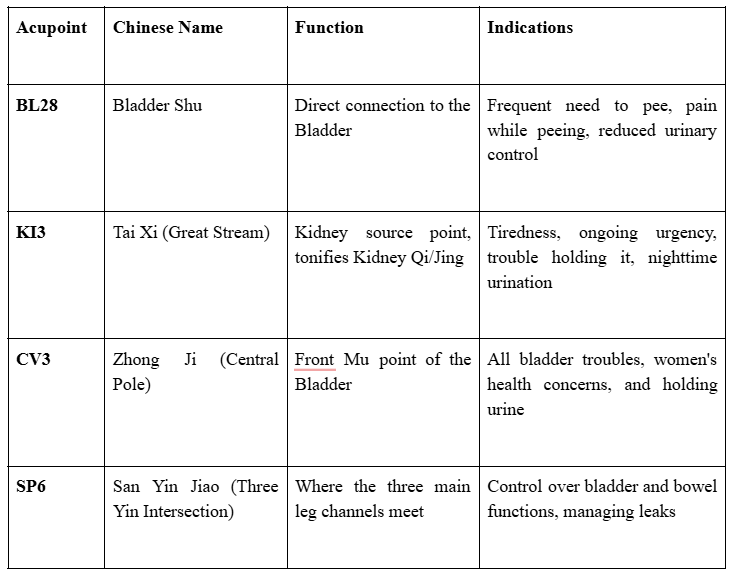
What spots on the body help with urination?
Needle therapists focus on spots along the bladder, also Kidney pathways, plus Spleen lines, or ones tied to the Conception vessel to bring harmony back.
What studies show acupuncture helps with pee problems?
Clinical research continues to explore acupuncture’s effects for bladder problems, with emerging evidence exploring its potential role through ongoing trials.
Chronic Pelvic Pain: A 2008 study found that acupuncture significantly improved symptoms in men with Chronic Prostatitis/Chronic Pelvic Pain Syndrome (CP/CPPS) compared to a sham acupuncture control group.
Some research suggests acupuncture may help with overactive bladder and similar issues by affecting how the bladder muscle works along with nerves in the pelvis.
What should you prepare for when getting acupuncture?
When you come to the Open Care Community for the first time, we take time to go over your health history so we get the whole story. Needles? They’re super thin, barely felt; instead of pain, patients often notice a mild ache, warmth, or brief sensations. Pricing adjusts based on what you can afford.
We provide two kinds of sessions, pick what fits you best, or try both if you're unsure:
Community acupuncture means getting care in a calm group setting, and costs adjust based on what you can pay, on a sliding scale of $50-$90. It’s a solid pick if you want consistent sessions without spending too much.
Private acupuncture means you get more time with the practitioner, and each session can include a front/back treatment or body work such as cupping or Gua sha.
Explore our sliding scale acupuncture options in downtown Brooklyn today.
What Role Do Chinese Herbs Play in Supporting Urinary Health?
Chinese herbal medicine forms the second main part of traditional Chinese healing, providing internal support that works well with needle therapy.
Do herbs help ease bladder irritation or swelling?
Chinese herbal medicine includes many plants that cool the body, clear out buildup, or drain damp; some ease heat, others help eliminate stagnation while building up energy; a few calm inflammation and support recovery at once.
Cooling and draining herbs help ease heat, plus drain dampness in the body. Che qian zi, also known as plantago seed, helps flush out irritation. Fu ling, often called poria, reduces swelling while calming discomfort. Hua shi, or talcum, cools down internal warmth linked to burning sensations.
Herbs should always be prescribed by a licensed provider. Your practitioner will check that what you take is the proper precaution at the right dose for you.
Do herbs change depending on my TCM reading?
Yes, this individualisation is a key strength of herbal medicine. A TCM herb mix is prescribed for your unique case, tailored through careful balance.
Your body’s makeup, plus how your symptoms show up like damp-heat, weak kidneys, or stuck energy, helps shape the mix. Instead of copying one recipe for everyone, herbalists pick from many herbs to fit you. This approach addresses more than urinary symptoms; it can help your gut, rest, and day-to-day stamina, too. Each version is built differently.
Are Chinese herbs safe to use alongside Western medicine?
If a qualified expert recommends them, Chinese herbs are generally considered safe when properly prescribed. Still, blending treatments works best when done right. Tell your TCM specialist about every pill or supplement you're taking. That way, they can tweak your herb mix to reduce the risk of interactions with what's already in your system.
How Does TCM Address Urinary Health for Women?
Can traditional Chinese remedies ease bladder issues after menopause?
Frequent peeing, a dry feeling, or sudden urges often pop up when going through or right after menopause. According to TCM, these signs usually tie back to declining Kidney Yin, the body’s nourishing and cooling aspect that dips naturally over time.
Treatment aims to nourish the Yin so the heat settles down while boosting internal nourishment. It works by building up the body’s foundation and calming energy. This method helps balance inner forces without forcing change. Instead of attacking symptoms, it supports natural restoration slowly over time.
Zhi Bai Di Huang Wan is a common herbal mix for issues tied to weak Kidney Yin. While some notice changes fast, others need weeks before effects show. Because body responses differ, results aren't the same across people. Some use it daily; others only when signs flare up. Even natural therapies should be used under professional guidance.
How do UTIs link to hormone changes or periods?
Hormone changes and pressure from daily life often tie into how the liver works. If emotional strain blocks Qi in the liver, heat may build up inside. That extra warmth might travel down, irritating the lower abdomen. It could trigger swelling or make peeing feel off just before or while on your period. Handling this means easing mental load, keeping energy moving freely.
Open Care Community offers specialized support for fertility and women's health.
Does Chinese Medicine Offer Support for Prostate or Men’s Urinary Health?
What conditions does TCM address for men’s urinary health?
TCM helps tackle male urinary issues often associated with aging or chronic stress, with supportive approaches used in clinical practice:
Chronic Prostatitis
Frequent trips to the bathroom, sometimes sudden, often without warning
A sense that you haven't fully emptied out
Some cases are weak kidney yang, making it hard to empty the bladder. Others are dampness and heat building up, causing swelling near the groin or prostate.
Does acupuncture work for leaking after peeing or sudden urges?
Research suggests acupuncture may help improve lower urinary tract issues (LUTS). Treatments usually target spots along the Kidney and Bladder pathways, such as BL35 or CV3, to help control how urine flows. Instead of needles alone, heat from moxibustion is commonly added to boost inner warmth and support vital energy linked to kidney strength needed for healthy bladder action.
Research has demonstrated that acupuncture improves lower urinary tract symptoms in men with Benign Prostatic Hyperplasia (BPH) and other LUTS.
How Can I Start My Healing Journey with Chinese Medicine?
What’s the best way to get ready for your initial herb or acupuncture session?
We hope you’re at ease so you can dive right into your session without any stress:
Stay fueled and refreshed, sip some water, then grab a small bite a few hours prior.
Put on comfy clothes. Loose-fitting clothing allows easier access to acupuncture points.
Share relevant health information: Chinese healing focuses on how your whole body works together. Come with intake paperwork filled out, including notes on meds you're taking, any vitamins, and get ready to talk about things like rest, emotions, or dietary habits that might seem off-topic.
What can I expect over time?
TCM builds up over time. Though some feel less pain or tension right away, fixing long-term bladder problems needs consistent treatment. Instead of quick fixes, we’ll help shape a doable routine, maybe weekly at first, then monthly check-ins later on. Progress isn’t identical for everyone, but we will work to find the right treatment path for you.
Curious about how traditional Chinese remedies might help your bladder stay healthy? Grab a spot today with our kind crew in Brooklyn. No need for insurance or proof of earnings, we go by what you can afford. Accessible, patient-centred care—without barriers.
FAQs
1. What is Traditional Chinese Medicine (TCM)?
Traditional Chinese Medicine is a holistic medical system that uses herbal remedies, acupuncture, and lifestyle practices to support overall health and balance in the body.
2. How can Chinese medicine support urinary health?
TCM may support urinary health by promoting balance in the body’s systems through herbal formulas, acupuncture, and dietary guidance.
3. What herbs are commonly used in Chinese medicine for urinary health?
Some traditional herbs are used to support kidney and bladder function, though specific formulas depend on individual health needs.
4. Can acupuncture help with urinary symptoms?
Acupuncture may help regulate body systems and support bladder function as part of a holistic treatment approach.
5. Is Chinese medicine safe for urinary health?
When practiced by qualified professionals, Traditional Chinese Medicine approaches are generally considered safe.
