
Massage for Anxiety Relief: NYC’s Most Effective Approaches
What Are the Most Effective Massage Techniques for Anxiety Relief in NYC?
Life in NYC can feel relentless, with long days and constant stimulation. It’s no surprise that many people experience ongoing stress or anxiety. Massage is no longer viewed only as a luxury; for many, it plays a supportive role in managing stress and emotional balance.
Why Is Massage Therapy an Effective Treatment for Anxiety?
When you feel anxious, your body shows it through chest tightening, shallow breath, or a racing heart. Massage can help ease these physical responses, sending signals to the nervous system that it is safe to relax.
The Nerves:Research suggests that hands-on therapies may help lower cortisol levels while supporting neurotransmitters associated with mood regulation. These changes can balance emotions and ease bodily signs of tension.
Rest Mode: Massage may help reduce ongoing tension by encouraging a shift from sympathetic (“fight or flight”) activity toward parasympathetic (“rest and digest”) nervous system function.
In Traditional Chinese Medicine, anxiety is often discussed in terms of qi, commonly described as the body’s vital energy. When you're anxious, that energy might get stuck or shoot upward in a messy way. Various modalities are used to support smoother qi flow, which is associated with a calmer, more balanced state.
What's the science on massage helping with overall anxiety or panic issues?
The proof goes beyond personal stories. A study published in 2010 found that participants with Generalized Anxiety Disorder (GAD) who received regular massage reported reduced anxiety symptoms over time. Shifting attention to physical sensation helps interrupt endless loops of stressful thinking that feed panic attacks.
Which Types of Massage Work Best for Anxiety Relief?
Some massages work differently. If your stress shows up as tight muscles, sleep trouble, or a fast heartbeat, certain methods might help more, but it depends on what fits you.
Swedish Massage
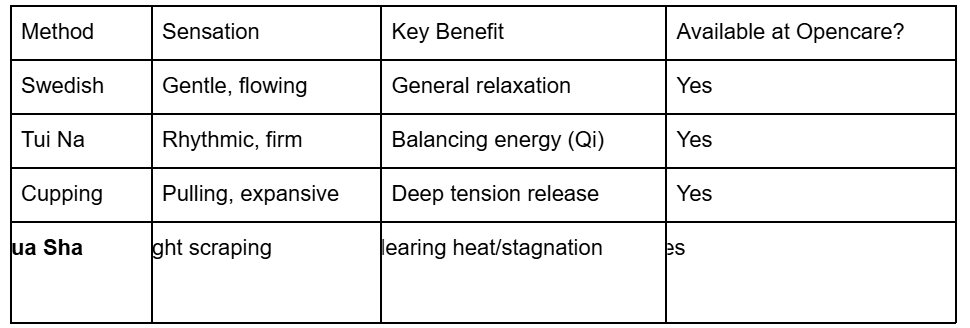
This method sets the top mark for calming your mind. With smooth, flowing movements paired with soft pressure, this technique boosts circulation while helping flush out muscle tension. Often chosen by patients new to bodywork, this approach is associated with a gentle, calming experience.
Tui Na (推拿): Moving Your Energy
Opencare Community offers Tui Na, a type of traditional Chinese bodywork. This practice applies steady pressure and sweeping motions across energy lines in the body. It is sometimes described as bodywork focused on supporting the flow of qi, or energy. Supporting areas of stagnation along these channels may help reduce physical tension while promoting emotional ease.
Cupping and Gua Sha
You’ve probably seen those round cupping bruises on sports stars, and some patients find it supportive during periods of heightened stress.
Cupping pulls stuck blood and warmth toward the skin using vacuum pressure; this might bring a sense of deep letting go when your chest or shoulders are tense from stress.
Gua Sha means gently rubbing the skin using a flat object to help blood flow better. These techniques may help calm the nervous system and promote a sense of relaxation.
Craniosacral Therapy and Reflexology
When we stick to Tui Na, massage therapy and traditional hands-on methods, some folks in NYC go for Craniosacral, which uses gentle pressure on the head and lower back, or reflexology, which targets spots in the feet. Either one can work well if a heavy massage feels too intense.
Pro-tip: Many of our patients find that pairing bodywork with an Herbal Consultation may help extend the sense of relaxation by supporting nervous system balance with traditional herbal formulas.
How Does Opencare Community Offer Anxiety Support Through Bodywork?
A Trauma-Aware Approach
Many people feel anxious because of things they’ve been through. Our team knows how this affects you, so we pay close attention to your needs. Rather than directing the experience, we prioritize safety, consent, and patient choice. You remain in control throughout the session, and your feedback guides our approach. What matters most isn’t our plan, but what feels right for you.
Radical Affordability
Money troubles often fuel worry. For support, pick a price that works; sessions run $50 to $90. No proof of earnings needed. We believe you’ll choose fairly, helping reduce financial stress so patients can focus on their care. Check our website for the affordable price of massage therapy sessions.
Integrated Care
In a session, your therapist could pair Tui Na along with facial massage using needles, or discuss whether an herbal consultation might be appropriate to support rest and relaxation. Because these methods team up, we aim to support multiple factors that contribute to stress, not just its physical sensations.
What Should Patients Expect During Their First Anxiety-Focused Massage?
Feeling a bit jittery ahead of your initial appointment? Totally okay, this happens often, especially when anxiety’s already in the mix. Here’s what helps us keep things smooth:
The First Chat: Your practitioner will review your health history and discuss where you tend to hold tension.
Comfort: When it comes to comfort, you pick how you’d like to relax, stay dressed in loose clothes, which works well for Tui Na and most treatments, or go with classic sheet coverage. Your space, your rules.
Duration: The session usually runs from 45 to 60 minutes. Though some notice a difference right away, real progress, like easing tension, usually shows after about three to five visits. Instead of stacking fixes, it’s more like steady steps adding up.
Where Can I Find Trusted Anxiety-Relieving Massage Therapists in NYC?
Looking after your mind? Credentials count.
Check Qualifications: Make sure your massage therapist has a valid license. Use theNew York State License Database to see if they're listed there.
Trauma-Informed Care: Look for clinics that explicitly mention trauma-informed practices, which are essential for those dealing with PTSD or severe panic disorders.
Location: At 44 Court Street in Brooklyn, our spot’s easy to get to, built for everyone, comfy, and open. It’s more like hanging out where people belong instead of sitting stiff in some cold clinic.
How Often Should I Get a Massage for Anxiety Relief?
Dealing with anxiety? Many patients find that consistency plays an important role in how supportive massage feels over time.
Intensive Support: When things get really tense, say, tackling a major task or going through personal shifts, a session every week might stop your body from hitting overload.
Maintenance: Once a month, a quick check-in keeps tension from building up in your body; think of it like hitting pause before things get tight.
Since we adjust prices based on need, plenty of people visit us more often than they could afford at pricey spas. This steady attention makes real differences over time.
What Other Holistic Therapies Complement Massage?
Bodywork helps a lot, yet it's just one part. Over at Opencare, we usually suggest:
Acupuncture: Needles might help, especially group sessions that calm mental chaos without costing much. It’s less about needles, more about steady breaths and shared quiet moments.
Chinese Herbal Blends: These natural mixes include calming plants plus remedies meant to boost inner balance, sort of like helpers that let your system quiet down when things get overwhelming.
Lifestyle Support: We love breathwork; also, jotting things down each day helps you stay steady till the next session.
Success Stories: Healing in Brooklyn
We’re here to make sure each person feels noticed and cared for. If you're an athlete struggling with pressure to perform, or if you're someone in NYC simply getting through the day, we’ve got your back.
Start Your Journey to Relief Today
You don’t have to navigate ongoing stress on your own. Help is nearer than it seems, and also cheaper than you’d guess. Start moving closer to a more relaxed version of yourself.
Book Online: Schedule Your Appointment
Call Us: (917) 426-1138
Visit Us: 44 Court Street, Suite 1000, Brooklyn, NY 11201
