
Myofascial Release in NYC: How It Works and Who It Helps
What Is Myofascial Release in NYC, and Is It the Right Therapy for You?
If you're based in NYC, whether living or working, you probably know that familiar strain: tense shoulders from lugging around a backpack, a rigid neck after staring at screens all day, or just feeling constantly on edge from the rush of city life. While many people turn to regular massage when discomfort builds, there is another approach that works deeper, supporting how the body moves and functions by addressing its connective structure. That approach is called Myofascial Release (MFR).
At Open Care Community, we believe supportive healthcare, including myofascial release, should be accessible regardless of income. This blog breaks down how the method eases tension, who gains from it most, plus ways to grab low-cost sessions around town.
What Exactly Is Myofascial Release Therapy?
To get myofascial release, you need to know about the fascia first, so let’s start there.
What’s fascia?
Your body is more than individual muscles; it is supported by a three-dimensional network of connective tissue. That net is called fascia, a strong tissue wrapping each muscle, bone, nerve, and even organs. When it's working right, fascia stays loose and curvy, so movement feels smooth and free.
Injury, prolonged strain, or ongoing stress may contribute to fascial tightness. As it tightens up and gets locked, things start pulling oddly, kinda like how a small tear in a knit shirt drags fibers from places you wouldn’t expect. “Myofascial” refers to the relationship between muscles and the connective tissue that surrounds them.
What happens when you do myofascial release in a treatment?
Instead of regular rubbing or squeezing, myofascial release relies on steady, light force. During a session, a practitioner identifies areas of restriction or tension within the tissue and presses by hand or eases into a mild stretch. They could try methods such as:
Skin Rolling: Gently lifting the skin away from deeper layers to encourage mobility in restricted tissue.
Sustained Pressure: Using sustained, gentle pressure that remains within the patient’s comfort level. Move slowly across the area, letting the tissue shift under your fingers. This small movement can ease stiffness over time.
Elongation: This means gently pulling a muscle or body part over time.
Focused Pressure: Pressing one spot until the muscle loosens up, often softening after a few seconds. Often, allowing time and stillness helps the tissue respond without force.
In our group, hands-on care comes with deep awareness. Because physical tension is often connected to emotional stress, we emphasize calm, attentive contact, so your mind-body can relax without pressure. A steady space helps ease built-up strain naturally.
Where Can You Find Myofascial Release in NYC?
New York’s packed with fancy wellness spots, yet tracking down affordable myofascial therapy? Not so easy.
Is myofascial release available in Brooklyn?
For sure, Open Care Community on 44 Court Street in Brooklyn mixes myofascial methods right into their hands-on treatments. Many New Yorkers are looking for meaningful relief, so we’ve created a clinic that prioritizes both clinical skill and genuine care.
What makes myofascial therapies at Open Care Community unique?
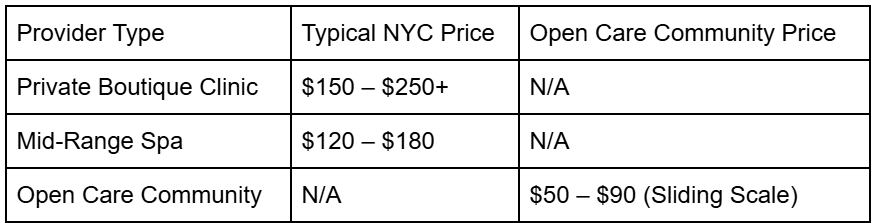
Many New York clinics charge over $200 for targeted treatments. Here’s what we do instead:
Sliding Scale Pricing: Fees go from $50 to $90 each session, and patients choose the rate that best fits their budget. No proof of income needed at any point.
Integrated Care: Our team knows more than one way to help you feel better. So your treatment could mix massage-like pressure with tiny needles, maybe even suction cups or scraping tools, it depends on what’s needed.
Inclusive Environment: We welcome patients of all abilities and follow ADA accessibility standards throughout our space. We’ve made sure folks of every size, gender, or life path feel okay being themselves here.
Who Benefits Most From Myofascial Release?
Fascia is found throughout the body, so plenty of folks might gain from it.
Do sports people or those who work out beat soreness while boosting results?
Sure thing. In Brooklyn’s workout scene, whether you’re running marathons or lifting heavy, addressing myofascial tissue may support recovery and movement quality. Here’s how:
Boosting how far you can move your body while improving stretchiness.
Fewer delays in healing when blood flow reaches tight spots better.
Tackling small pains early, so they don’t turn into big problems.
Could myofascial therapy help with ongoing tightness or slouching?
If you're dealing with "Tech Neck" or soreness in your lower back from hours at a desk, chances are your fascia’s gotten used to hunching. Loosening it up can reset how your body holds itself, easing discomfort like:
Chronic tension headaches.
Sciatica along with stiff hips.
TMJ (jaw pain).
Could massage of muscles and connective tissue help with getting pregnant or regulating hormones?
Lots of folks we see are dealing with fertility stuff, IVF included. This type of massage really helps out. Releasing tension in the pelvic and abdominal areas may support circulation to reproductive tissues. This work may also support nervous system regulation, which is associated with hormonal balance and recovery.
What Does a Typical Myofascial Release Session Feel Like?
What’ll happen on your first visit?
Your first trip begins with a chat. We’ll go over your medical past, spots that hurt, and what you’re aiming for. You can pick one-on-one meetings or group-based care. When it’s just you in a hands-on session, attention stays on your body setup, plus releasing tension by hand.
Does it feel uncomfortable, and is it safe?
Myofascial release tends to be quite safe. Though you may notice strong pressure, or something like a satisfying ache when tightness lets go, it’s never meant to sting or overwhelm. We stay in touch throughout, adjusting to how you’re feeling. Now and then, some patients report emotional shifts, such as a sense of calm or increased body awareness, as muscle stress melts away.
How Does Myofascial Release Complement Other Therapies?
Could you combine acupuncture with myofascial release?
In Chinese Medicine, people focus on Qi, your body’s energy, moving along pathways called meridians. Interestingly, these pathways are often discussed alongside modern anatomical understandings of fascial networks. Instead of treating them separately, we apply acupuncture to shift Qi flow while using myofascial techniques to loosen the actual tissue, the fascia, which is traditionally associated with energy flow.
What else could you try on top of that?
At Open Care Community, we often suggest a "toolbox" approach:
Cupping: Pulls fluid into skin layers by creating vacuum pressure, loosening tight connective sheets gradually.
Gua Sha: A method using scrapes to loosen tight spots and old buildup.
Tui Na: A kind of old-school Chinese bodywork using steady pressure moves.
How Often Should You Get Myofascial Therapy?
How often do you need appointments when dealing with ongoing pain?
If you're dealing with a particular injury or ongoing ache, many patients benefit from weekly sessions over a period of four to six weeks. That way, we’re building real progress in your body instead of just easing symptoms for now.
What factors affect treatment frequency?
Your stress, workout routine, or even how long you’ve dealt with discomfort, each one matters. Some people stop by monthly just to reset, whereas others show up more often when life gets overwhelming. No matter what’s going on, we’ll adjust things so it fits what works for your wallet.
How Much Does Myofascial Therapy Cost in NYC?
How Can I Get Started at Open Care Community?
Starting is easy. No doctor’s note or official diagnosis needed.
Book Online: Visit our Booking Page to see available slots.
Contact Us: Got a question? Email us at info@opencarecommunity.com or call (917) 426-1138.
Stop by: Find us at 44 Court Street, Suite 1000, Brooklyn, NY 11201.
How Does Myofascial Therapy Support Whole-Person Wellness?
We’re not looking at some “sore back” or “stiff shoulder”, we’re seeing the entire individual. This technique works deep into the body’s connective web, helping calm things down internally. As tension melts out of the fascia, stress levels tend to slide right along with it.
Some folks say they stand taller, feel lighter, like their feet stick better to the floor once treatment’s done. When the city never stops pushing you to perform, this approach invites you to slow down, reconnect with your body, and restore balance.
Ready to Feel Looser, Lighter, and More Grounded?
Stop letting constant stress keep you from living fully in Brooklyn. If you're chasing peak performance as an athlete or just need a break from the daily grind, we’re here ready to help.
Schedule your myofascial release session today.
From only $50. No coverage required. Supportive care, without pressure.
